Bolsonaro takes surprise lead over Lula before Brazil runoff
Published in Political News
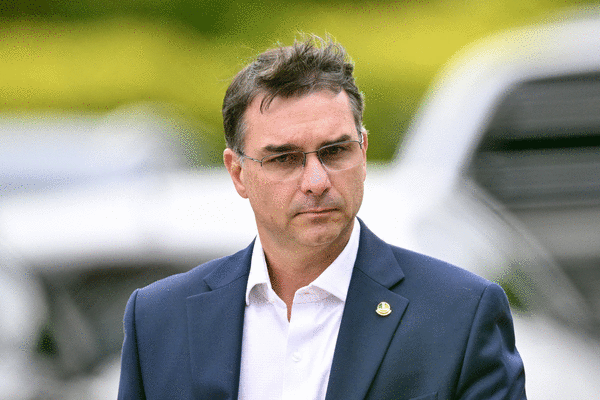
Right-wing senator Flávio Bolsonaro surged to a surprise lead over incumbent Luiz Inácio Lula da Silva in the first round of Brazil’s presidential race, a result that if confirmed in final counts would rally markets and position him as the favorite in a runoff later this month.
Bolsonaro led Sunday’s first round election with about 49.6% of the vote to the leftist Lula’s 42.3% with roughly 65% of ballots counted. Pollster Datafolha projected they would runoff around 7 p.m. local time.
Polls had shown that Bolsonaro, the eldest son of former President Jair Bolsonaro, would finish behind Lula in the first round.
But the overperformace for the Rio de Janeiro senator suggests Latin America’s largest nation is on the cusp of joining a regional rightward shift that has seen allies of U.S. President Donald Trump win recent votes in Chile, Colombia and Peru.
The results, if confirmed, are virtually certain to boost Brazilian assets when markets open Monday morning, as investors have aligned behind Bolsonaro on the view that he’s more likely try to rein in the country’s mounting fiscal deficits and rising public debt levels.
They will also highlight the challenge facing Lula ahead of the Oct. 25 runoff vote. The 80-year-old made a yearlong push to stimulate the economy and deliver aid to Brazilians, but the early results add to evidence his political message no longer resonates as it once did.
The implications of the election will rumble far beyond Brazil. A victory for Bolsonaro would accelerate Trump’s effort to reassert U.S. primacy over the Americas: Brazil under Lula has been among the last holdouts to Trump’s so-called “Donroe Doctrine” for the Western Hemisphere, remaining a bellwether of the regional embrace of China the U.S. leader is trying to reverse.
Trump has played an outsize role in the nation’s politics since last year, when he slapped tariffs on Brazil in an unsuccessful bid to help Jair Bolsonaro escape conviction.
He later reconciled with Lula and lifted the levies. But he reimposed tariffs in July, handing Lula an opportunity to argue that Trump was interfering in Brazilian affairs to boost Flávio Bolsonaro, who has pledged to move the country closer to the U.S.
Brazil’s race, however, has largely focused on another object of voter concern: corruption, fueled primarily by a probe into Banco Master SA, the failed lender at the center of a $10 billion fraud investigation that has repeatedly upended the race.
Bolsonaro sagged behind Lula earlier this year amid revelations that he’d sought money from Daniel Vorcaro, the bank’s jailed former owner, for a film about his father — links that are now subject to federal investigation. (Bolsonaro denies wrongdoing.)
But the scandal later dented Lula’s reelection bid after leaked messages deepened ties between Supreme Court Justice Alexandre de Moraes and Vorcaro.
An ensuing institutional crisis inside the powerful top court fueled a surge in momentum behind Bolsonaro, who used it to renew calls for Moraes’ impeachment while painting the judge who oversaw his father’s conviction as a close Lula ally.
Economy and markets
That’s largely distracted from economic issues, even as the candidates offer competing visions for it. Lula, who has long favored a spend-to-grow approach with a focus on stimulating consumer demand, has overseen steady expansion and near-record low unemployment.
But growth has begun to slow amid high interest rates meant to bring inflation back to the central bank’s target, and borrowing costs that remain at 13.75% have weighed on major Brazilian companies and consumers alike.
The nominal fiscal deficit, meanwhile, has risen to nearly 10% of gross domestic product while public debt has soared above 80%, leaving investors scouring the race for plans to shore up accounts in a way that would make it easier for policymakers to reduce rates.
Lula and his advisers have alternated between pledges to tackle the debt and questioning the need to: “We need to stop this nonsense about running budget surpluses,” Lula said at one event in the race’s final stages.
Bolsonaro, in a nod to the austerity drive led by libertarian Argentina leader Javier Milei, has wielded scissors to promise a “big cut” in spending. He’s provided little detail about his plans, but it’s made him the preferred choice of investors who see him as more likely to pursue fiscal adjustments.
Lula has unleashed a rash of stimulus this year in a bid to help consumers access cheaper credit and ease debt pressures. In the race’s final weeks, he boosted social welfare benefits and unveiled a plan to use public funds to buy delinquent debts.
He also banned online gambling, which he’s blamed for plunging Brazilians into the red.
©2026 Bloomberg L.P. Visit bloomberg.com. Distributed by Tribune Content Agency, LLC.












































Comments