Maryland Democrats dominate state government. Who keeps them in check?
Published in News & Features
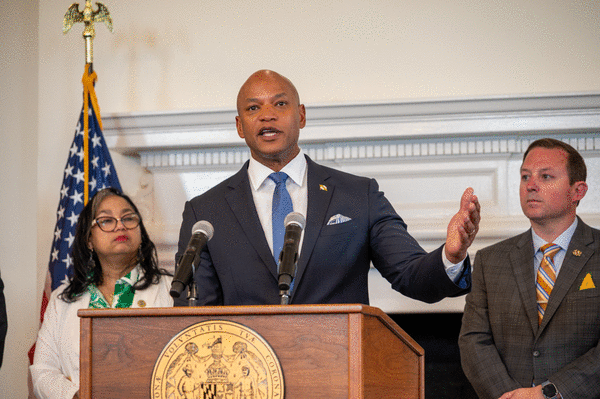
BALTIMORE — Maryland Democrats have few political obstacles standing between them and their legislative agenda. But as the party prepares to make difficult decisions about taxes, spending, schools and development, a bigger question looms: Who holds those in power accountable when their own party controls nearly every lever of state government?
With Democrats controlling the governor’s office and holding supermajorities in the General Assembly, the party has broad power to shape state policy with limited opposition. That gives Democratic leaders significant latitude over decisions that affect Marylanders’ taxes, schools, housing and public services — but also puts greater responsibility on them to deliver results and answer for failures. The checks on that power increasingly come from within the party, local governments and voters themselves, but whether those forces can meaningfully change policy or hold leaders accountable is less certain.
Niambi Carter, a professor at the University of Maryland’s School of Public Policy, said Democrats can no longer blame Republican opposition for blocking their priorities when they control so much of state government.
“If you’re a one-party state, you can no longer say that it was the other people that obstructed you from doing something,” Carter said. “It puts a lot more pressure on Democrats in the state to produce something.”
But Democrats’ dominance in Annapolis does not give them control over every decision in Maryland. Local governments retain significant authority over land-use decisions, allowing county leaders to restrict or block projects even when state lawmakers support them, said Erik Robey, a Republican strategist who has worked on county races in Anne Arundel County.
“[For] things like solar farms and data centers that we’ve seen the state government try to advance policies [on], we’ve seen a lot of counties put in either strict regulations or straight-out bans not allowing those things to happen,” Robey said.
Harford County has banned data centers, while Carroll County has restricted solar projects to commercial and industrial zones.
But local authority is only one potential check on state policy. A more consequential test may come from within the Democratic Party itself, where lawmakers who disagree with leadership must find ways to change its position — or risk seeing their objections go nowhere.
When Democrats disagree with their own leadership
House Majority Leader David Moon said Democrats’ dominance in Maryland does not mean the party is politically uniform. But when asked how Democratic leaders handle dissent within their own ranks, Moon emphasized that the party is a “big tent.”
A dispute over redistricting during the last legislative session offered one example of how difficult it can be for rank-and-file Democrats to challenge their chamber’s leadership.
When outgoing state Sen. Arthur Ellis, a Charles County Democrat, protested the Senate’s refusal to consider redistricting legislation in February, Senate President Bill Ferguson downplayed the impact of his actions, saying the chamber was focused on affordability issues. The legislation never received a committee hearing, despite the House passing redistricting legislation, and some senators publicly expressing support for the effort.
Ellis said disagreements within the party are unlikely to disappear, even when individual lawmakers fail to change leadership’s position. He pointed to voters’ approval of a constitutional amendment loosening the state’s congressional mapmaking rules as an example of how political decisions can ultimately be shaped outside the General Assembly. Future redistricting efforts are still in limbo, as doubts rise on whether the Senate will soften its stance.
“We got that special session done, we had a referendum on the ballot, and we got it approved by the voters,” Ellis said. “That’s accountability.”
Can the minority still hold Democrats accountable?
Although Democrats hold a vast majority of governing seats in the legislature, 106 in the House of Delegates and 35 in the Senate, Republicans still have opportunities to challenge the party at the ballot box, particularly if voters become dissatisfied with Democratic policies.
Moon pointed to former Republican Gov. Larry Hogan’s two terms as evidence that Republicans can still win statewide office in Maryland. “I wouldn’t count the Republicans out immediately,” he said.
Matthew Crenson, a professor emeritus at Johns Hopkins University, said Democrats’ 2026 electoral gains were driven in part by the unpopularity of the national Republican Party, a political advantage that may not last in future election cycles.
“If you’re a Dan Cox Republican, you’re doomed. If a candidate is a Larry Hogan Republican, they have a very good chance, especially since the voters are probably going to want to set up some accountability for Democrats by looking to Republicans,” Crenson said, referring to the appeal of moderate Republicans in a state where Democrats hold a significant electoral advantage.
The decisions Democrats make about taxes and spending could become another test of their ability to govern, said Flavio Hickel, a politics professor at Washington College. “The public is generally going to reward political actors that are seen as doing good work,” Hickel said, noting that the fear of losing elections motivates elected officials to keep voters happy.
As Maryland lawmakers prepare to confront difficult budget choices and other contentious policy decisions, Democrats will have fewer opportunities to blame Republican opposition for the outcome. Whether voters and members of their own party can force meaningful changes may offer a measure of how accountable the state’s dominant political party is willing — or able — to be.
_____
©2026 The Baltimore Sun. Visit at baltimoresun.com. Distributed by Tribune Content Agency, LLC.






Comments