DFLers will control MN government in January. What might be their agenda?
Published in News & Features
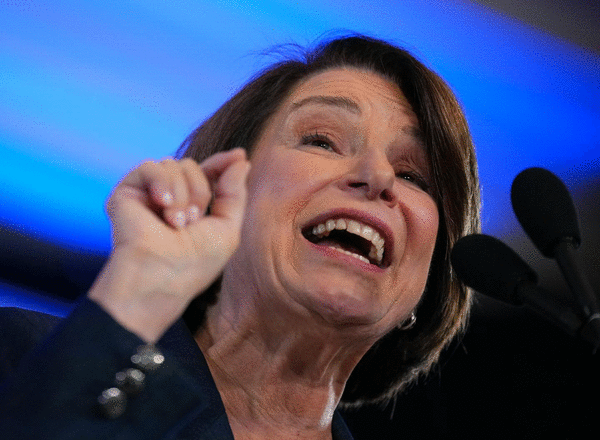
Amy Klobuchar is set to leave the U.S. Senate and become Minnesota’s next governor in just two months, and transition preparations are already underway.
Speaking with reporters Wednesday after winning the Nov. 3 election, Klobuchar said she will focus on “transforming state government” after a series of major fraud scandals.
“We’re going to rebuild trust, speed up government, and work for you,” she said. “That means rooting out the waste, fraud and abuse and cutting through the red tape.”
On Wednesday Klobuchar explained her priorities and announced members of her transition team, which includes former St. Paul Mayor Melvin Carter and Chief Deputy Ramsey County Attorney and former St. Paul city attorney Sam Clark.
When the new Democratic-Farmer-Labor governor takes office, her party will be in control of both the Minnesota House and Senate again, meaning many of their shared goals, like new gun control legislation, should have an unimpeded path to becoming law – potentially early on in the 2027 legislative session.
“I think the gun safety bill is going to get passed, and I am so excited to be working with the leaders on this,” Klobuchar told reporters Wednesday. “It certainly should be one of our top priorities.”
Gun control
Senate DFLers passed a bill to ban so-called assault weapons, semiautomatic rifles with features like detachable magazines, in May this year, but Republicans wouldn’t let the bill advance in the tied House.
Democrats had pushed for new gun laws after the August 2025 shooting at Annunciation Catholic School in Minneapolis that killed two young children and will now have a chance to pass significant gun control bills after growing their Senate majority by at least five seats and their House majority by at least eight.
Democrats may also now have a chance to put the Equal Rights Amendment on the ballot, which would change the Minnesota Constitution to specifically ban discrimination based on race, national origin, sex, gender identity and sexual orientation. Klobuchar supports the ERA, though only Senate and House approval is needed for ballot measures.
‘Top-to-bottom’ audit
Beyond gun legislation, Klobuchar plans to conduct a “top-to-bottom” audit of state government when she takes office as part of a broader effort to root out fraud — which may have cost hundreds of millions, if not billions, of dollars in federal funds that went to state programs. The fraud issue also cost outgoing DFL Gov. Tim Walz a chance at a third term.
“There will be zero tolerance for fraud in my administration,” she said. “We’ll have in-person inspections and unannounced visits, and if you’re caught trying to rip off Minnesota taxpayers, there will be serious consequences.”
A proposed “Do Not Pay” database would help keep people or contractors convicted of fraud from getting state money in the future.
Klobuchar said the audit would aim to help state agencies streamline their processes and find out ways programs can save money, though it’s unclear just how much the state would save and if it would be enough to balance the budget while accomplishing some of her other goals.
Healthcare, housing, childcare
House DFL Leader Zack Stephenson, a representative from Coon Rapids, said his caucus is “largely in the same place” on Klobuchar’s goal of addressing growing living costs, though it may take some time before they arrive at agreement on the specifics.
“Certainly when we sit down over the next weeks and months and line up her ideas (and) our ideas, do I think that they will be a 100% match? No, I mean obviously not,” he said. “But we will be able to work through it. We were able to work through a tie these last two years and deliver things having to deal with House Republicans.”
The governor-elect has said she wants to address rising healthcare costs and has proposed using state money to help cover expired Affordable Care Act subsidies and bulk drug purchases.
She’s also hoping to launch an initiative that would push to work with private-sector companies to build 100,000 new housing units in the state and backs efforts to expand access to child care while reducing costs.
As head of the executive branch, Klobuchar will have significant power over the management of state agencies. But when it comes to piecing together the state budget, which must pass before the current $66 billion two-year budget expires at the end of June, she will have to work with lawmakers.
It’s yet to be seen what legislative Democrats will want out of the next state budget. So far, Stephenson and Senate Majority Leader Erin Murphy, DFL-St. Paul, have not shared any detailed plans for the next session. Their focus immediately after the election was organizing their new majorities.
Last trifecta under Democrats
The last time they controlled state government, the DFL grew spending by nearly 40% and created many new social programs like paid family and medical leave and universal school meals.
Klobuchar, who is generally regarded as more moderate than her party’s progressive wing, has pledged not to raise taxes when she takes office, meaning significant growth of government spending appears off the table. That could put her at odds with some members of the House and Senate DFL caucuses, but how they will balance their interests is yet to be seen.
Asked about any potential rifts between her and lawmakers from the she DFL’s left flank, Klobuchar acknowledged that she would expect some disagreements to emerge, though added she has had productive conversations with House and Senate caucus leaders of both parties.
“Spoiler alert: you’re not going to like everything I do,” Klobuchar said she told fellow DFLers. “I think it’s really important for people to understand that we are in agreement on the purpose here. The purpose is to make the government work and I talked to all four leaders about this, and they are all committed to this.”
State’s fiscal situation
In 2023, DFL lawmakers — during their “trifecta” of state government control — approved a historic, nearly $72 billion spending plan by tapping a $17.5 billion budget surplus and raising billions more in tax revenue.
DFLers said the 38% increase in spending over current levels was part of their progressive vision for Minnesota’s future. Republicans criticized it as an irresponsible spending spree that put the state on tricky fiscal ground.
While Minnesota has some financial padding in the short term, growing costs in government programs will eventually mean the state is spending more than it takes in by the end of the decade, according to Minnesota Management and Budget.
February’s forecast from MMB shows the state has a $3.7 billion surplus for the current two-year budget cycle. But later this decade, the state will face fiscal headwinds.
The next major forecast will likely come in December, giving Klobuchar and DFL legislators an update on how much money they will have to work with while crafting the next two-year budget.
“There’s a lot that remains to be seen in terms of the state’s budget picture and what resources we’ll have available,” Stephenson said when asked about Klobuchar’s taxes pledge.
Federal cuts to healthcare could put Minnesota in a difficult fiscal position, potentially creating a “massive hole in the state’s budget that will be very difficult for us to address,” he added.
Republican leaders said they’d have to see whether Klobuchar would stand by her pledge to not raise taxes under pressure from members of her own party.
“We already know from the last trifecta that Democrats are willing to raise taxes by billions to pay for their wish list,” House Republican Leader Harry Niska said in a statement on the next DFL trifecta. “The question now is whether Governor-elect Klobuchar will stand up to the tax-and-spend wing of her party, or whether she’ll be another rubber stamp for the far-left agenda, like Tim Walz was.”
_____
©2026 MediaNews Group, Inc. Visit at twincities.com. Distributed by Tribune Content Agency, LLC.





Comments