Election trust rebounds as two-thirds of Americans say midterms 'free and fair,' new poll finds
Published in Political News
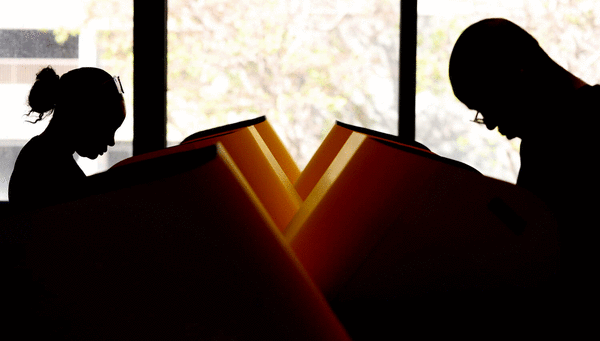
LOS ANGELES — Two-thirds of Americans believe the recent midterm elections were "free and fair," according to a new nationwide poll.
That's a substantial increase in election trust compared with before the elections, when a similar poll found that less than half of Americans — 49% — expected the vote to be fair.
Americans also believe by a 3-1 margin that elections should remain primarily run by state and local officials and that the federal government should not take control, a rebuke of the Trump administration's unsuccessful efforts to intervene in state elections leading up to the midterms. Majorities of Democrats, independents and Republicans all felt that way, according to the poll by UC San Diego's Center for Transparent and Trusted Elections.
The increase in Americans believing the midterms were "free and fair" was driven by a large swing among Democrats, whose party in this month's elections regained power in both chambers of Congress, won a handful of additional governorships and took new majorities in state houses across the country.
Before the Nov. 3 election, 55% of Democrats believed the midterms would be free and fair. After the election, 93% believed the elections played out that way, the poll found.
Independents moved in the same direction, from 43% believing the elections would be free and fair beforehand to 66% believing they were afterward, the poll found.
By contrast, Republicans lost confidence. Before the midterms, 55% of Republicans believed the elections would be free and fair, while 46% believe they were afterward, the poll found.
Voters' attitudes toward elections often vacillate based on whether their party wins — something the UC San Diego pollsters referred to as the "winner-loser effect." And partisanship remained a prominent indicator of where Americans stood in the latest poll.
However, the decline in trust among Republicans after this month's elections was "muted" compared with the increase in trust among Democrats, while the increase in trust among Democrats and independents was greater than normal, the pollsters noted.
That likely had to do with several factors, they said.
Among Republicans, trust had been declining steadily since after President Donald Trump's 2024 general election victory, in part because of the president's baseless claims of widespread fraud and election corruption among Democrats.
Lauren Prather, one of the UC San Diego center's co-directors, said the Republican drop in trust after the midterms may be because "it had already declined quite a bit," but also because Trump, many Republican leaders and losing Republican candidates quickly accepted their losses after the election — even though Trump has since walked that back.
Democrats' "overwhelming victory makes it hard to really challenge the results in a way that has been done before," and it becomes even "more difficult to sell a story about the election being rigged when you don't also have the actual candidates that lost trying to challenge or trying to corroborate that narrative," Prather said.
Thad Kousser, the center's other co-director, said the "off-the-chart" increase in trust among Democrats surely had to do in part with their party's sweeping wins, but also likely had to do with the fact that many of their concerns were not with election administration but with potential interference from the Trump administration — which didn't come to fruition.
"They had a whole host of other concerns: Would the federal government intercede in the election, would it be seizing ballots, would there be ICE at the polling places?" Kousser said. "Well, that didn't happen."
Trump alleged without evidence before the election that Democrats would cheat to win, and has alleged since — again without any evidence — that Democrats did cheat. The president has made baseless allegations of election fraud for years.
Prior to the midterms, Trump issued multiple election-related executive orders that attempted to enforce new mail ballot, voter ID and proof of citizenship requirements nationwide. The U.S. Postal Service tried to impose its own vetting process on mail ballots, and the Justice Department sued states across the country for their voter rolls as part of an effort to purge alleged noncitizen voters, and sued California and Los Angeles County in an attempt to block 20,000 ballots they alleged could be from noncitizens.
All of those efforts were blocked by federal courts.
Democrats and election officials in California had vigorously fought the federal efforts, and have since cheered the midterms as a relatively uneventful success — including in L.A. County, where officials said they were able to count millions of ballots faster than in the past as a result of investments in election infrastructure and staffing.
According to the poll, Americans of all parties strongly favor local and state control over federal control. That included 78% of Democrats, 62% of independents and 52% of Republicans — showing that local control is "an idea of federalism that has enduring appeal," Kousser said.
However, that doesn't necessarily mean discussions about election fraud are going away. The poll also found that although a majority of Democrats think political leaders are talking too much about the issue, more Republicans think they are talking the right amount or not enough about it, the poll found.
"Republican leaders, political leaders, might find a receptive audience in their base in future years for this," Kousser said.
Respondents also expressed concerns about the role artificial intelligence played in the midterms, and about election insiders betting on outcomes of political races on prediction markets.
The national poll of 3,430 American adults was conducted Nov. 9 to 16, with a margin of error of plus or minus 1.7%.
©2026 Los Angeles Times. Visit at latimes.com. Distributed by Tribune Content Agency, LLC.



































Comments