Trump vows to fight on as clock ticks on permanent daylight saving time bill
Published in Political News
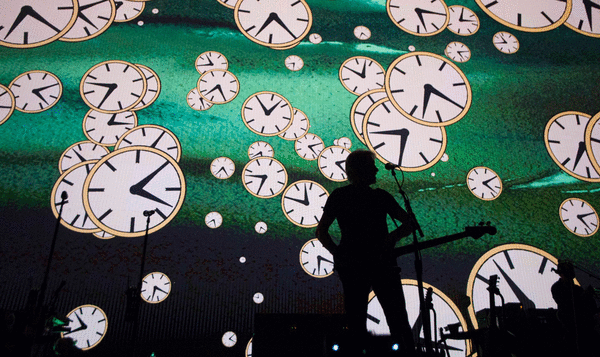
As the clock ticks down for the Senate to pass the so-called Sunshine Protection Act to mandate year-round daylight saving time in most of the United States, President Donald Trump on Wednesday said he planned to "keep fighting" for the change.
In July, the House, in a lopsided bipartisan vote, approved a measure to make year-round daylight saving time the default for most of the United States. But its companion bill remains stalled in the Senate.
"Too bad the Senate has not yet approved the Sunshine Protection Act or, the I Don't Want to Change My Clocks Anymore Act," Trump wrote in a Truth Social post.
Daylight saving time ended on Sunday, Nov. 1, meaning clocks in most of the United States fell back one hour at 2 a.m. Daylight saving time will begin again on March 14, 2027, unless the bill passes both chambers and is signed by Trump before then.
In his post, Trump lamented that it was dark by 5:31 p.m. "Just a few days ago it was so nice and sunny at this same time," he said.
"I didn't want to make a big deal out of this prior to the Election because I didn't want to have certain Senators lose their Race, in a landslide, but it is too bad they can't get it done," Trump said.
Trump continued: "We have far bigger priorities, but I will keep fighting for this!"
Although permanent daylight saving time would mean brighter winter evenings, it would also mean darker winter mornings.
If the legislation were to pass, Los Angeles would see its latest sunrise of the year at 8 a.m. Sacramento would see sunrise as late as 8:24 a.m., and San Francisco as late as 8:25 a.m.
The debate over timekeeping has pitted some golf course owners — who argue that later sunsets are good for business as it gives people more daylight to play golf after work — against doctors, who say the darker mornings and brighter evenings of permanent daylight saving time weaken the circadian clock for many people.
Trump owns golf courses across the United States, including in New Jersey, North Carolina, Washington, D.C., and on the Palos Verdes Peninsula.
At times, the debate has turned ugly. In October, Trump appeared to share the cellphone number of a vocal critic of the legislation, Sen. Tom Cotton telling his supporters to contact the Arkansas Republican.
Cotton has long argued that the late sunrises in the winter would mean students would need to walk to school in the dark and risk being struck by drivers — as was the case in 1974 when the U.S. briefly adopted year-round daylight saving time to combat an energy crisis.
Arizona resident Jay Pea, a former software engineer and the founder of the nonprofit Save Standard Time, also wants to put an end to the twice-annual clock adjustments.
But he's not a fan of permanent daylight saving time, which he said would particularly burden outdoor workers, such as construction crews, farmers and groundskeepers, who would probably have to start their days in the dark.
"It makes you get up one hour earlier. It makes you start work in school one hour earlier," Pea told The Times on Thursday. "Nobody's calling up his congressman and saying, 'Hey, can you make me go to work an hour earlier? Can you make me set my alarm an hour earlier?' But that's what DST [daylight saving time] does."
Pea favors year-round standard time. It keeps clocks aligned with the sun, he said. He supports an alternative proposal, the Sunshine for Our Kids Act, which was introduced in July by Rep. Mary Gay Scanlon, D-Pa.
The proposal would make standard time the default year-round but give states the ability to opt out. That legislation remains stalled in the House, according to Pea.
—Times staff writer Rong-Gong Lin II contributed reporting.
©2026 Los Angeles Times. Visit at latimes.com. Distributed by Tribune Content Agency, LLC.







































Comments