Trump proposes eliminating race, ethnicity questions from 2030 census, alarming health, civil rights advocates
Published in Political News
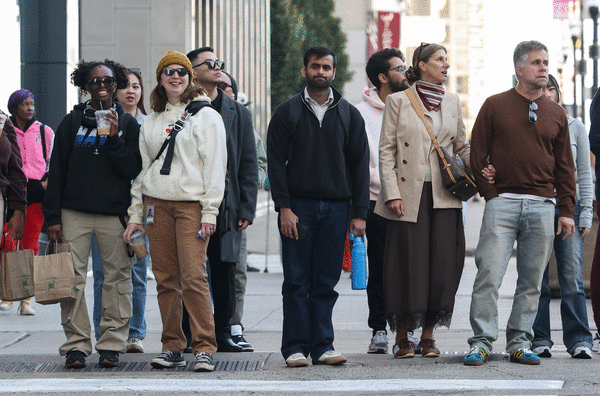
CHICAGO — A Trump administration proposal to eliminate questions about race, ethnicity and sexual orientation from the U.S. census could hurt efforts to address inequities in Chicago and across the nation, health and civil rights advocates warn.
The proposal is part of the administration’s broader effort to eliminate diversity, equity and inclusion programs. The U.S. Census Bureau states in the proposal that the process “should be colorblind and not be distorted in any way by questions about immaterial personal characteristics.”
Race has been a census category since the census started in 1790, and racial and ethnicity information has been used for decades as the basis for enforcing voting rights, tracking disparities and monitoring preferences for minorities and women.
Minority advocates say the change would be highly significant, ending a variety of datasets used to counter inequalities in healthcare, housing and education.
Race is fundamental to the ways in which societies and markets organize people, according to research by Lez Trujillo Torres, assistant professor of marketing at the University of Illinois Chicago, who studies how race plays a role in the marketplace.
“When the government stops measuring race, it doesn’t disappear from markets, it just becomes harder to measure disparities,” she said. “It generally makes it harder for policy makers to address problems in healthcare, housing, education and so many other markets that depend on it.”
The administration is accepting public comments on the proposal through Nov. 2 at regulations.gov.
Studies show that groups such as Black people and Native Americans consistently suffer worse health outcomes and higher mortality rates than white people in the United States, due in part to socioeconomic status and to access to good quality healthcare.
To address this, healthcare professionals try to identify at-risk populations to target them for healthcare facilities and services.
During the COVID pandemic, for instance, initial data showed Black and Hispanic residents in Chicago had lower vaccination rates and were hospitalized and died at higher rates than white residents.
In response, along with priority for age and co-morbidities, city health officials and the U.S. Veterans Administration targeted minorities for vaccination outreach through mobile clinics and local providers.
Critics, such as those at the Cato Institute, argued this was a violation of the constitutional requirement for equal legal protection for all people. They advocated instead for basing vaccinations on objective criteria, such as working in high-risk jobs or having an illness that made people more vulnerable.
Advocates for race-based demographics argue that it helps counter systemic inequities. While the location of Black, white and Hispanic neighborhoods may seem obvious in Chicago, researchers say populations are constantly changing due to immigration and movement among cities and states.
As a current example, sickle cell disease primarily strikes African Americans. Though screening identifies the disease in newborns, failing to identify where Black people end up living could impair efforts to provide them services, said Dr. Lewis Hsu, director of the Pediatric Sickle Cell Center at the University of Illinois Chicago.
People with sickle cell suffer debilitating pain and are at higher risk for serious fevers and infections and higher pregnancy-related mortality. They need medical providers and facilities prepared for diagnosing and treating conditions that may seem less threatening for other people, Hsu said.
Targeting sickle cell care to areas that most need it can prevent these problems, and using Census data to identify pockets of African Americans helps to target those areas, Hsu said. For instance, doctors from Peoria have driven to Rockford and Rock Island to serve populations there.
“It’s a way to avoid acute crisis intervention and intensive care,” Hsu said. “It’s a step removed from the census, but indirectly a consequence. The census is not just for votes or market share, it’s also for public health.”
Sonya Grier, the Kogod eminent scholar chair in marketing at American University in Washington, D.C., who has researched market topics related to race, called the potential census change “a huge loss.” It could affect, for example, Chicago’s efforts to address “food deserts” that lack stores providing healthy food.
“We have lots of research that shows inequalities exist,” she said. “Removing questions about race makes those disparities harder to see. We need demographic information to see who the services are reaching.”
Also as proposed, the census would count only citizens and legal permanent residents and not immigrants who are without legal status. Advocates say this would tailor representation in the House of Representatives to those with legal standing, while critics like the American Civil Liberties Union say it violates the constitutional requirement to count all persons, and would reduce services to areas with larger immigrant populations.
Congress has delegated the implementation of the census to the U.S. Census Bureau, under the president’s authority. But the Constitution gives Congress ultimate authority to conduct the count of the population every 10 years, and the federal code gives Congress the power to determine rules and questions for the census.
The upcoming Nov. 3 elections could help determine the ultimate fate of the measure, which would be due to take effect with the 2030 census.
©2026 Chicago Tribune. Visit at chicagotribune.com. Distributed by Tribune Content Agency, LLC.









































Comments