Armed poll watchers: New Jersey’s 1981 racist voter intimidation campaign is a cautionary tale ahead of 2026 midterms
Published in Political News
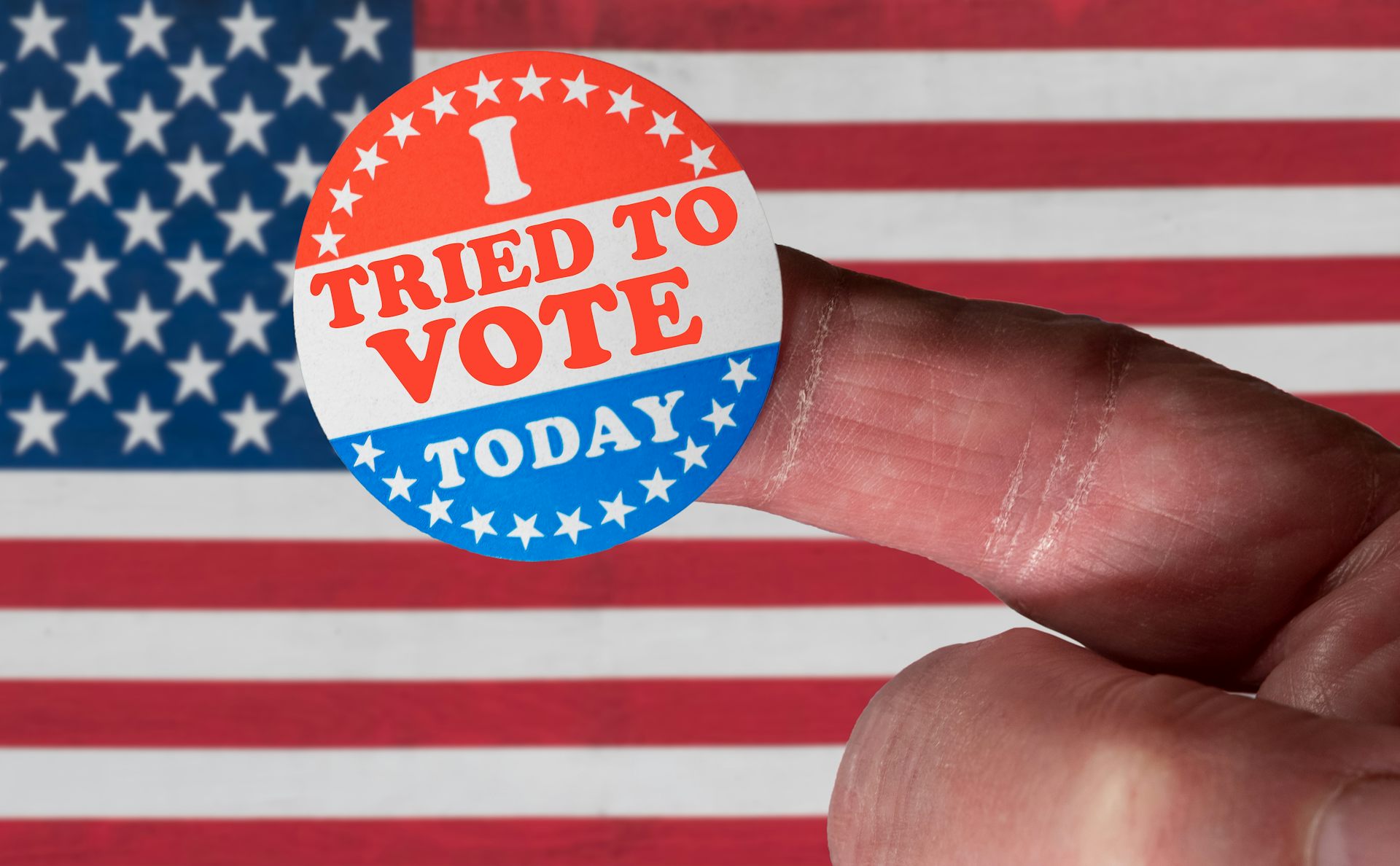
In the history of voter suppression in the United States, including attempts to stop Black and Latino people from voting, Republican tactics in the 1981 New Jersey gubernatorial race stand out.
That November, voters in several cities saw posters at polling places printed in bright red letters: “WARNING. This area is being patrolled by the National Ballot Security Task Force.”
About 200 patrols were deployed statewide, many of them uniformed and carrying guns.
In Trenton, patrol members asked a Black voter for her registration card and turned her away when she didn’t produce it. Latino voters were prevented from voting in Vineland, while in Newark some voters were physically chased from the polls by patrolmen, one of whom warned a poll worker not to stay at her post after dark. Similar scenes played out in at least two other cities, Camden and Atlantic City.
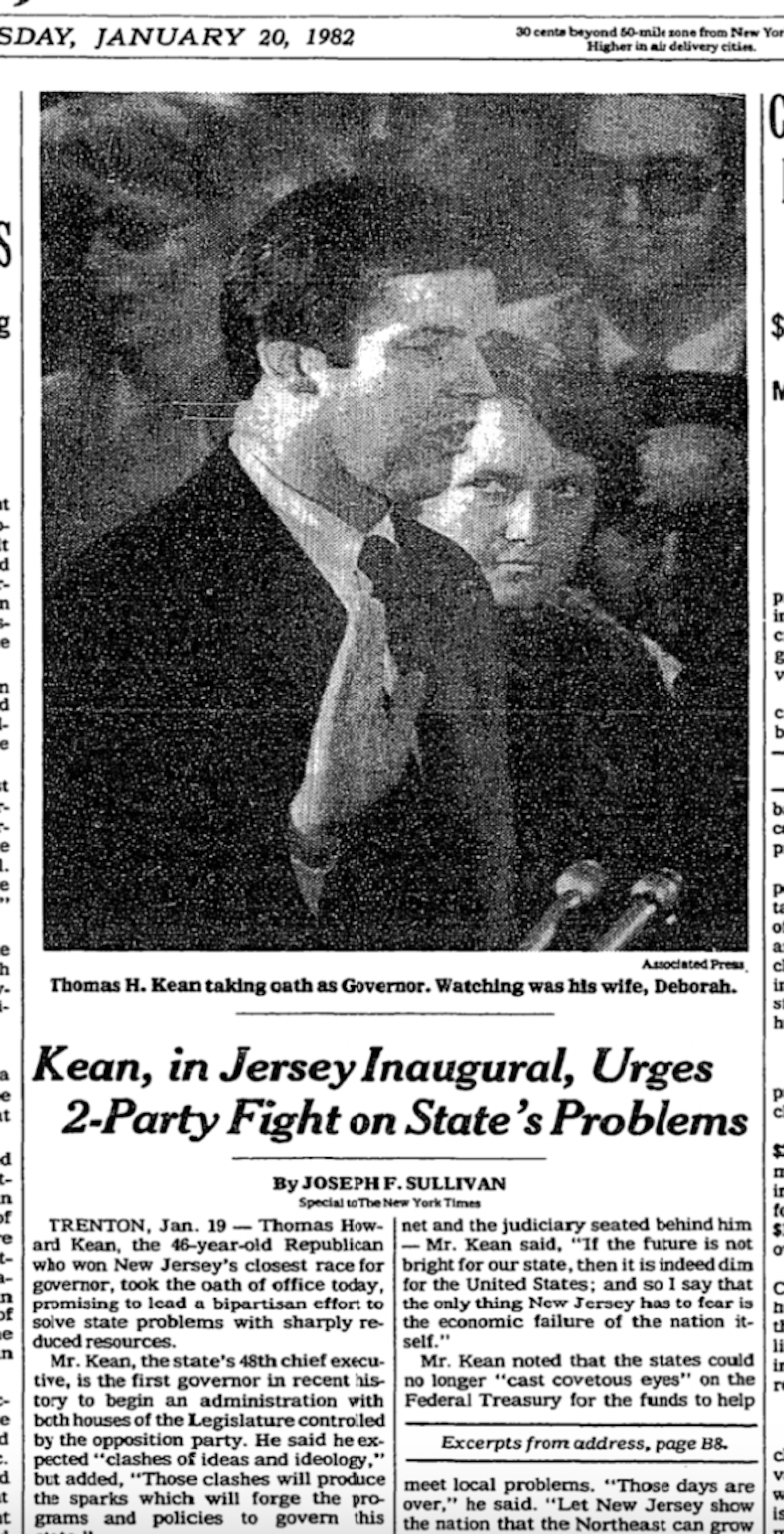
Weeks later, after a recount, Republican Thomas Kean won election as governor by fewer than 1,800 votes.
Democrats, however, soon won a significant victory. With local civil rights activists, they discovered that the “ballot security” operation was a joint project of the state and national Republican committees. They filed suit in December 1981, charging Republicans with “efforts to intimidate, threaten and coerce duly qualified black and Hispanic voters.”
In November 1982, the case was settled when the Republican committees signed a federal consent decree – a court order applicable to activities anywhere in the U.S. – agreeing not to use race in selecting targets for ballot security activities and to refrain from deploying armed poll watchers.
That decree expired in 2018 after Democrats failed to convince a judge to renew it.
The 1981 voter suppression efforts resonate today in the midst of the Trump administration’s persistent efforts to suppress the vote and undermine trust in elections nationwide.
In May 2026, a PBS reporter asked President Donald Trump whether he would send the National Guard or ICE to polling places in the midterm elections.
“He did not rule it out,” wrote reporter Liz Landers.
Considered an early referendum on Ronald Reagan’s presidency, New Jersey’s 1981 gubernatorial race featured Kean – with Roger Stone at the campaign’s helm – promising corporate tax cuts and relying heavily on Reagan’s endorsement.
State and national Republican party officials then devised a project they claimed would prevent Democratic cheating at the polls.
In the summer of 1981, the Republican National Committee sent an operative named John A. Kelly to New Jersey to run a ballot security effort. Kelly had previously served as one of the RNC’s liaisons to the Reagan White House.
In August 1981, under the guise of the National Ballot Security Taskforce, Kelly sent about 200,000 letters marked “return to sender” to voters in heavily Black and Latino districts. Those whose letters were returned had their names added to a list of voters to be challenged at the polls on Election Day, a tactic known as voter caging.
In the Newark area, Kelly produced a list of 20,000 voters whom he deemed potentially fraudulent. He then hired local operatives to organize patrols, ostensibly to keep such fraud at bay. To run the Newark operation, he hired Anthony Imperiale.
Imperiale, in turn, hired off-duty police officers and employees of his private business, the Imperiale Security Police, to patrol voting sites in the city.
The gun-toting, barrel-chested former Marine had first adopted the security role during Newark’s 1967 uprising – five days of protests and a deadly occupation of the city by police and the National Guard following the police beating of a Black cab driver. During the uprising, Imperiale organized patrols of his predominantly white neighborhood to keep “the riots” out.
Soon, Imperiale became a hero of white backlash politics. His opposition to police reform earned him widespread support from law enforcement. And his fight against Black housing development in Newark’s North Ward delighted many of his neighbors. By the end of the 1970s, Hollywood was making a movie based on his activities.
After serving as an independent in both houses of the state legislature, Imperiale became a Republican in 1979. Two years later, he campaigned with Kean.
Once in office, the new governor named Imperiale director of a new one-man state Office of Community Safety – an appointment often interpreted as reward for Imperiale’s leadership of the ballot efforts in Newark, but stymied when Democrats refused to fund the position.
Despite Kean’s slim margin of victory, Democrats at the time were careful not to claim that Republican voter suppression efforts had decided the election. In 2016, the former Democratic candidate claimed they did indeed make the difference.
Rather, the state and national Democratic committees brought suit against the Republican National Committee to ensure it couldn’t again use such methods anywhere. For nearly 40 years – through amendments and challenges – the resulting consent decree helped curtail voter suppression tactics.
After the decree’s expiration in 2018, Republicans ramped up their recruitment of poll watchers for the 2020 presidential election. After his loss in that election, Trump led a campaign aimed at discrediting the vote’s legitimacy, claiming fraud and irregularities that he’s been consistently unable to prove.
Since winning in 2024, Trump has led a comprehensive effort to discredit and suppress mail voting. And the Department of Justice, Assistant Attorney General Harmeet Dhillon posted on X, has a “plan to send 1,000 federal election monitors to select locations around the country to observe the general election in November. This will be the largest monitoring effort in @theJusticeDept history!”
In addition to those efforts, CNN reports that “the Republican National Committee is training new ‘special monitors’ to scrutinize voting machines.”
This November, Republican tactics in 1981 are worth remembering. They demonstrate that the safeguarding of polling places from allegedly fraudulent voters and of public places from supposedly threatening people of color share not only a logic.
They also share a history.
This story is an updated version of an article originally published Aug. 10, 2020.
This article is republished from The Conversation, a nonprofit, independent news organization bringing you facts and trustworthy analysis to help you make sense of our complex world. It was written by: Mark Krasovic, Rutgers University - Newark
Read more:
As concerns mount over integrity of US elections, so does support for international poll monitors
Midterms 2022: 4 experts on the effects of voter intimidation laws, widespread mail‑in voting – and what makes a winner
Holy voter suppression, Batgirl! What comics reveal about gender and democracy
Mark Krasovic does not work for, consult, own shares in or receive funding from any company or organization that would benefit from this article, and has disclosed no relevant affiliations beyond their academic appointment.








































Comments