Veterans benefits bill gets 218 signatures on discharge petition
Published in Political News
WASHINGTON — House Democrats will be able to force a vote to bring a long-stalled veterans benefits bill to the floor after securing 218 signatures on a discharge petition.
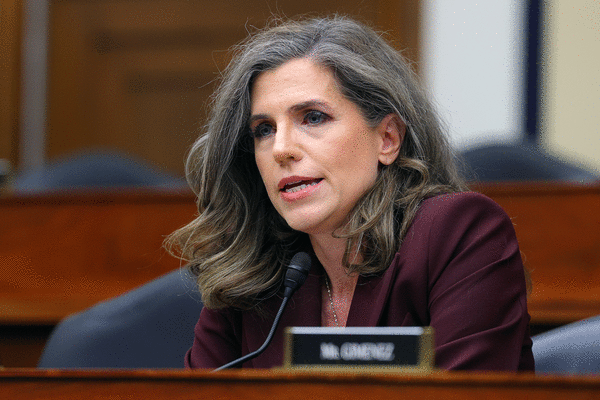
Rep. Nancy Mace, R-S.C., signed the petition Tuesday night, giving it the magic number needed to be successful.
“Thank you @RepNancyMace for joining the right side of this fight for the 59,000 combat injured veterans who have waited long enough,” House Veterans’ Affairs Committee Democrats posted on social media. “We now have 218 signatures on the discharge petition for the Major Richard Star Act — a majority of the House has spoken. @SpeakerJohnson must schedule a vote.”
At issue is the Major Richard Star Act. The bill would allow more combat-injured veterans to collect the full amounts of both their military retirement pay and their Department of Veterans Affairs disability benefits. Right now, the retirement pay is offset a dollar for every dollar of disability pay for most veterans who were forced to retire early from the military because of combat injuries.
The bill has been a top priority for veterans groups and has ample bipartisan support. But the measure has stalled for years over concerns about how to offset its increase in mandatory spending.
The increase in retirement pay is estimated to cost about $11 billion.
Democrats launched their discharge petition in May in hopes of finally shaking the bill loose.
Weeks later, Republicans in the House and Senate unveiled their own proposal to advance the Major Richard Star Act: the Take Care of America’s Veterans Act. Their bill combines the Star Act with other stalled veterans measures.
But the GOP proposal would pay for the increase in benefits by codifying a proposed rule to cut VA benefits for tinnitus and sleep apnea. That has drawn opposition from some veterans groups, Democrats and some Republicans, and the Take Care of America’s Veterans Act is now stalled as well.
In addition to Mace, Republicans who signed the discharge petition include Reps. Jeff Van Drew of New Jersey, Thomas Massie of Kentucky, Brian Fitzpatrick of Pennsylvania and Anna Paulina Luna of Florida. It has also been signed by every House Democrat.
Now that the petition has enough signatures, anyone who signed it can call for a vote on a discharge motion within seven legislative days. Once a lawmaker does that, the House has to vote on the motion within two legislative days.
The petition itself is based on a rule for floor consideration of the Star Act. That means if the discharge vote is successful, the House would then vote on the rule immediately followed by the Star Act itself.
With the House scheduled to leave town Wednesday until after the midterm elections, a vote on the Star Act will likely wait until November.
©2026 CQ-Roll Call, Inc., All Rights Reserved. Visit cqrollcall.com. Distributed by Tribune Content Agency, LLC.

















































Comments