‘Destruction is not the same as political success’: US bombing of Iran shows little evidence of endgame strategy
Published in Political News
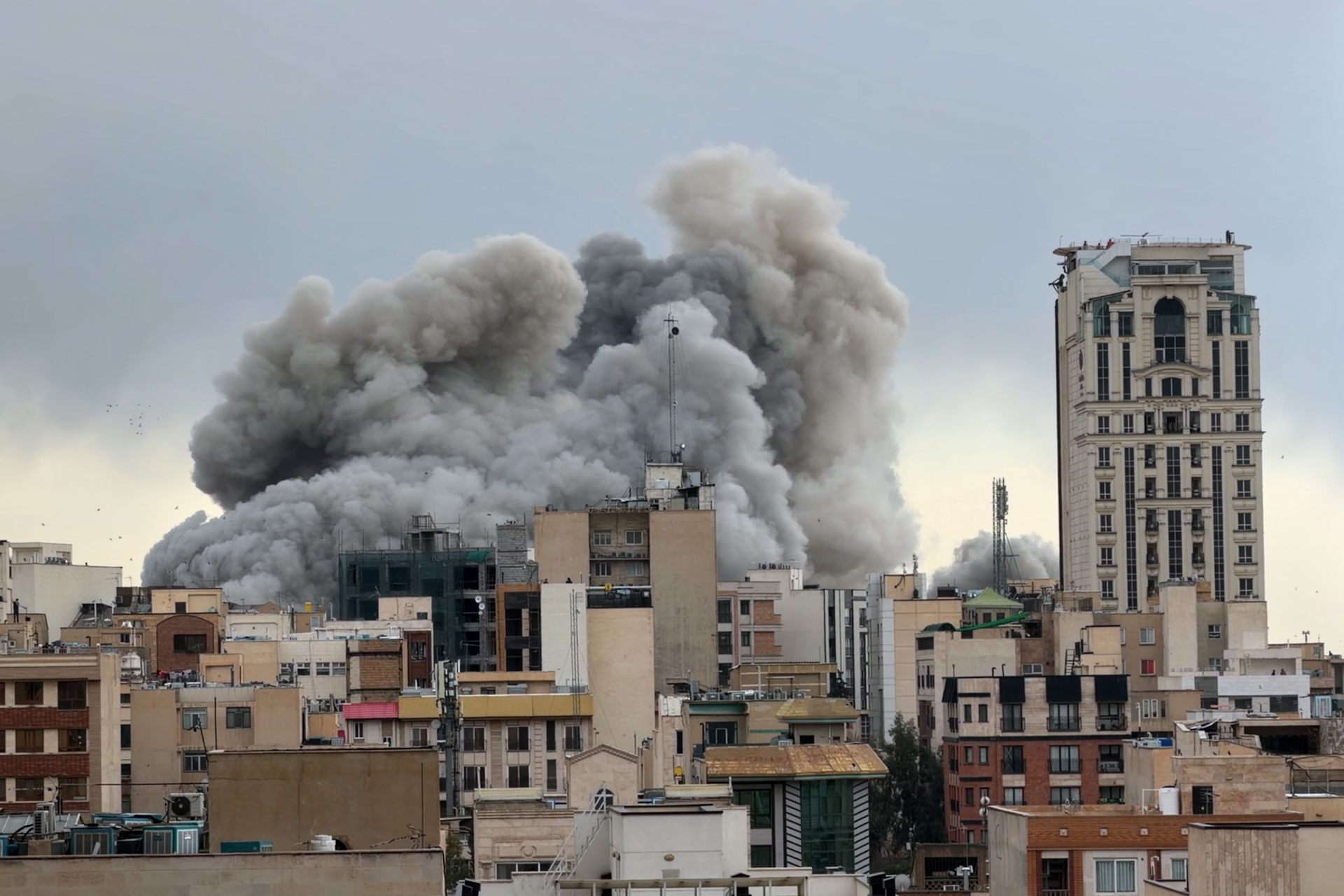
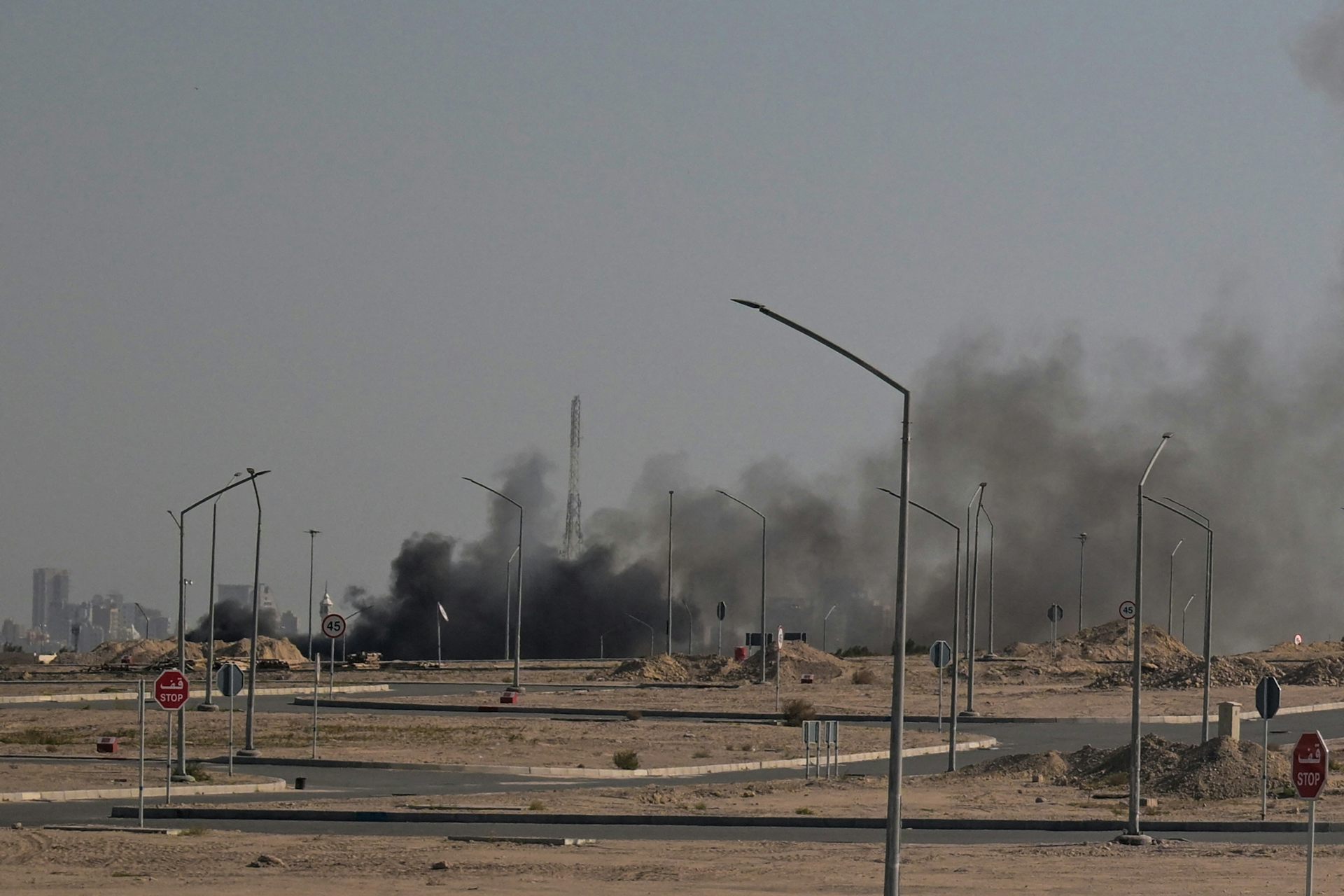
Shortly after the opening salvo of U.S.-Israeli attacks on Iran on Feb. 28, 2026 – with missiles targeting cities across the country, some of which killed Supreme Leader Ayatollah Ali Khamenei – President Donald Trump declared the objective was to destroy Iran’s military capabilities and give rise to a change in government.
Framing the operation as a war of liberation, Trump called on Iranians to “take over your government.”
In the first days alone, Israel dropped over 2,000 bombs on Iranian targets, equal to half the tonnage of the 12-day Israel-Iran conflict in June 2025. Heavy U.S. bombing, meanwhile, has targeted Iran’s Revolutionary Guard as well as ballistic missile and aerial defense sites.
The destruction is real. But, as an international relations scholar, I know that destruction is not the same as political success. And the historical record of U.S. bombing campaigns aimed at regime change shows that the gap between the two – the point at which Afghanistan, Iraq and Libya campaigns all stalled – is where wars go to die.
Decades of scholarship dating back to World War I on using air power to force political change has established a consistent finding: Bombing can degrade military capacity and destroy infrastructure, but it does not produce governments more cooperative with the attacker.
Political outcomes require political processes – negotiation, institution-building, legitimate transitions of power.
Bombs cannot create any of these. Instead, what they reliably create is destruction, and destruction generates its own dynamics: rallying among the population, power vacuums, radicalization and cycles of retaliation.
The American record confirms this. In 2003, the George W. Bush administration launched “Shock and Awe” in Iraq with the explicit aim of regime change. The military objective was achieved in weeks. The political objective was never achieved at all.
The U.S. decision to disband the Iraqi army created a vacuum filled not by democratic reformers but by sectarian militias and eventually ISIS. The regime that eventually emerged was not friendly to American interests. It was deeply influenced by Iran.
In 2011, the Obama administration led a NATO air campaign in Libya that quickly expanded from civilian protection into regime change. Dictator Moammar Gadhafi was overthrown and killed.
But there was no plan for political transition. Chaos and political instability have endured since. Asked what his “worst mistake” was as president, Barack Obama said, “Probably failing to plan for the day after, what I think was the right thing to do, in intervening in Libya.” Libya remains a failed state today.
The intervention also sent a powerful signal to countries pursuing nuclear weapons: Gaddhafi had dismantled his nuclear program in 2003. Eight years later, NATO destroyed his regime.
Even Kosovo, often cited as the success story of coercive air power, undermines the case. Seventy-eight days of NATO bombing did not, by themselves, compel Slobodan Milosevic, president of the Federal Republic of Yugoslavia, to withdraw.
What changed was the credible threat of a ground invasion combined with Russia’s withdrawal of diplomatic support. The political outcome – contested statehood, ongoing ethnic tensions – is hardly the stable governance that air power advocates promise.
The pattern is consistent: The United States repeatedly confuses its unmatched capacity to destroy from the air with the ability to dictate political outcomes.
The recent U.S. attacks on Iran raise a fundamental question: Why is the United States fighting this war at all?
The administration has declared regime change as its objective, justifying the campaign on the grounds of Iran’s nuclear program and missile capabilities.
But that nuclear program was being actively negotiated in Geneva days before the strikes. And Iran’s foreign minister told NBC the two sides were close to a deal. Then the bombs fell.
Iran did not attack America. And it currently does not have the capability to threaten the American homeland. What Iran challenges is Israel’s regional military dominance, and I believe it is Israel’s objective of neutralizing a rival that is driving this operation.
Israel targeted 30 senior Iranian leaders in the opening strikes. Israeli officials described it as a preemptive attack to “remove threats to the State of Israel.” I see the strategic logic for these killings as Israel’s, and Americans are absorbing the costs.
U.S. military bases in Bahrain, Qatar, Kuwait, the UAE, Jordan, and Saudi Arabia have taken Iranian missile fire. American service members are in harm’s way – three have already been killed – not because Iran attacked them, but I believe because their president committed them to someone else’s war without a clear endgame.
Each coercive step in this conflict – from the 2018 withdrawal from the nuclear deal, to the 2020 assassination of Qasem Soleimani, Iran’s most powerful military commander, to the June 2025 strikes – was framed as restoring leverage.
Each produced the opposite, eliminating diplomatic off-ramps, accelerating the very threats it aimed to contain.
Decapitation strikes assume that removing a leader removes the obstacle to political change. But Iran’s political system is institutional — the Guardian Council, the Assembly of Experts and the Revolutionary Guard have survived for four decades.
The system has succession mechanisms, but they were designed for orderly transitions, not for active bombardment. The group most likely to fill the vacuum is the Revolutionary Guard, whose institutional interest lies in escalation, not accommodation.
There is a deeper irony. The largest protests since 1979 swept Iran just weeks ago. A genuine domestic opposition was growing. The strikes have almost certainly destroyed that movement’s prospects.
Decades of research on rally-around-the-flag effects – the tendency of populations to unite behind their government when attacked by a foreign power – confirms that external attacks fuse regime and nation, even when citizens despise their leaders.
Iranians who were chanting “death to the dictator” are now watching foreign bombs fall on their cities during Ramadan, hearing reports of over 100 children killed in a strike on a girls school in Minab.
Trump’s call for Iranians to “seize control of your destiny” echoes a familiar pattern. In 1953, the CIA overthrew Iran’s democratically elected prime minister in the name of freedom.
That produced the Shah, the Shah’s brutal reign led to the Iranian Revolution in 1979, and the revolution produced the Islamic Republic now being bombed.
What comes next? And what guarantee is there that whatever emerges will be any friendlier to Israel or the United States?
This is the question no one in Washington has answered. If the objective is regime change, who governs 92 million people after?
If the objective is stability, why are American bases across the Middle East absorbing missile fire?
There is no American theory of political endgame in Iran — only a theory of destruction. That theory has been tested in Afghanistan, Iraq and Libya – and Iran itself over the preceding eight months. It has failed every time, not because of poor execution, but because the premise is flawed.
Air power can raze a government’s infrastructure. It cannot build the political order that must replace it. Iran, with its sophisticated military, near-nuclear capability, proxy networks spanning the region and a regime now martyred by foreign attack, will likely not be the exception.
U.S. law prohibits the assassination of foreign leaders, and instead Israel killed Iran’s supreme leader while American warplanes filled the skies overhead. Washington has called the result freedom at hand, but it has not answered the only question that matters: What comes next?
This article is republished from The Conversation, a nonprofit, independent news organization bringing you facts and trustworthy analysis to help you make sense of our complex world. It was written by: Farah N. Jan, University of Pennsylvania
Read more:
Failure of US‑Iran talks was all too predictable — but turning to military strikes creates dangerous unknowns
Iran will respond to US‑Israeli strikes as existential threats to the regime – because they are
Despite massive US attack and death of ayatollah, regime change in Iran is unlikely
Farah N. Jan does not work for, consult, own shares in or receive funding from any company or organization that would benefit from this article, and has disclosed no relevant affiliations beyond their academic appointment.





















































Comments