US asks non-emergency staff to exit Israel as Iran tension grows
Published in Political News
The U.S. has told non-emergency staff at its embassy in Jerusalem that they’re allowed to leave Israel, citing heightened safety risks.
Tensions between the U.S. and Iran remain high, with the two engaged in talks to avert American strikes on the Islamic Republic. Israel may join in on any attack and be targeted by Iranian retaliation.
The stand-off is weighing on Israeli financial markets, with the country’s stocks among the world’s worst performers this week and the shekel having its worst two-day streak since the June’s 12-day war with Iran.
In an update on Friday, Washington advised non-essential workers and family members to consider leaving while commercial flights are available. Regional tensions have led many airlines to suspend connections with Tel Aviv, Israel’s commercial capital.
It said it may prohibit travel to certain areas such as Jerusalem’s Old City the West Bank for staff.
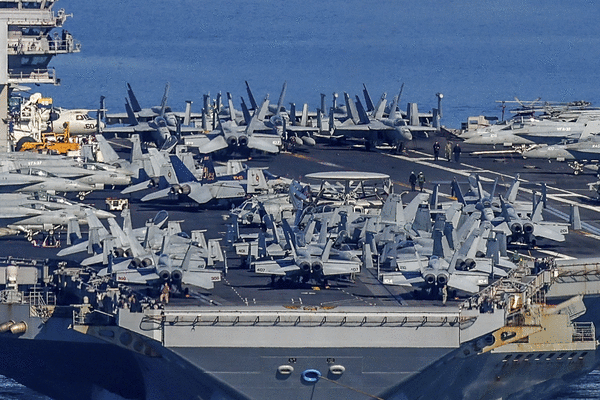
The warning follows a third round of nuclear talks in Geneva between U.S. and Iranian officials on Thursday. The sides agreed to reconvene as soon as next week, with technical talks potentially happening on Monday in Vienna. Even with the U.S. saying the door to further diplomacy remains open, President Donald Trump has amassed huge military forces in the Middle East.
China, Australia, Poland, Finland, Sweden, India and Singapore are among countries advising their citizens to leave some locations in the Middle East. The U.S. earlier announced it was pulling personnel from its embassy in Lebanon.
A second aircraft carrier, the USS Gerald R. Ford, has entered the Middle East and is now in Israeli waters, according to local media. It could join in any attack of Iran or help defend Israel and U.S. assets against Iranian counter-strikes.
©2026 Bloomberg L.P. Visit bloomberg.com. Distributed by Tribune Content Agency, LLC.




















































Comments