Commentary: Trump's rhetoric of exaggeration hurts democracy
Published in Political News
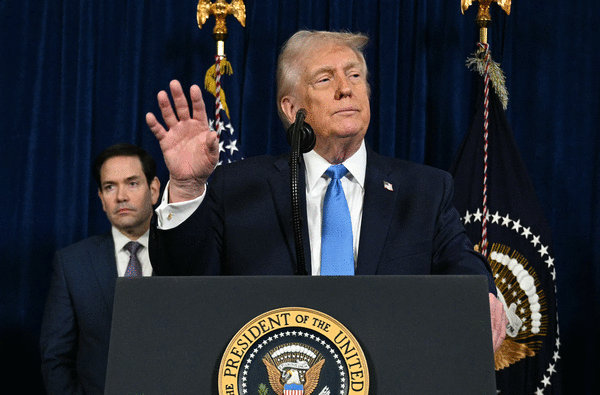
One of the most telling aspects of President Donald Trump’s political style isn’t a specific policy but how he talks about the world.
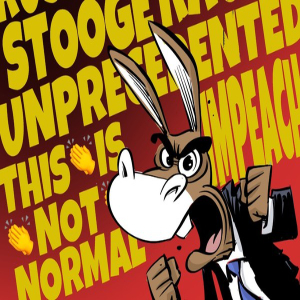
His speeches and social media posts overflow with superlatives: “The likes of which nobody’s ever seen before,” “Numbers we’ve never seen,” and “Like nobody ever thought possible.” This constant "unprecedented" language does more than add emphasis—it triggers fear-based thinking.
Reporters have found that he uses these phrases hundreds of times each year, on almost any topic. Whether the subject is the economy, immigration, crime, or even weather, the message is always the same: everything is either an unprecedented success or failure. There’s no middle ground, nuance, or room for finding common ground.
This is not just a personal habit. It’s a deliberate strategy to shape public perception. When every issue is called the greatest, worst, biggest, or most disastrous, people react emotionally rather than think critically.
Communication studies show that crisis-driven messaging strengthens partisan loyalty and hinders cross-partisan engagement. The world begins to feel in crisis, with the leader as the only solution.
Is this how we want our leader to behave? When leaders exaggerate every challenge as new or disastrous, it weakens democracy, erodes trust, and highlights divisions. Shouldn’t we want leaders who foster unity and thoughtful discussion instead?
Trump uses the same approach when talking about people. His attacks rely on extreme labels: “weak,” “lazy,” “dumb as a rock,” “crazy,” and “incompetent.” These are not criticisms of ideas or policies; they reduce people to a single exaggerated flaw.
During the 2024 presidential campaign, he called Kamala Harris “mentally impaired.” In that speech, he spent far more time mocking her intelligence and character than addressing policy differences. The goal was not to debate her ideas but to demean her as a person and make her seem unworthy before any conversation began.
Trump’s aim is not to persuade, but to dominate. He seeks to define opponents so thoroughly that people stop considering them. This approach reduces issues, treats complexity as weakness, and views cruelty as strength.
This rhetoric affects more than politics. When leaders use absolutes, people do the same. When public figures reduce opponents to caricatures, others follow. Calling every problem unprecedented or catastrophic makes it harder to build steady, patient groups needed in a democracy. Doesn’t decency matter? Isn’t our civic health tied to leaders who show restraint?
We know this because we teach it to children. We tell kids not to call names, judge by a single flaw, or win by putting others down. We teach that words can hurt, respect is vital, and disagreement doesn’t require meanness.
When a leader ignores these basics, it tells us that mocking is an argument, put-downs are power, and taking someone’s dignity is just another tactic. This damage is real; it erodes the shared decency that enables a diverse society. Research on civic norms shows that playground rules, such as respect and understanding, apply to public life. Studies find that values from childhood shape adult behavior, and breaking these rules weakens society.
As a country, we want to succeed. We need strong institutions, a stable economy, and leaders who can navigate complexity. But can’t we meet these goals with honor? Don’t strength and decency go together? American history’s greatest moments—from expanding civil rights to landing on the moon—came from cooperation and humility, not insults or exaggeration.
Exaggeration may excite crowds, but it can’t sustain a nation. For that, we need commitment to truth, to each other, and to democratic values. The question isn’t whether we want America to succeed but whether we believe success requires integrity and whether we expect our leaders to live by the values we teach our children.
___
David L. Nevins is the publisher of The Fulcrum and co-founder and board chairman of the Bridge Alliance Education Fund.
_____
©2026 The Fulcrum. Visit at thefulcrum.us. Distributed by Tribune Content Agency, LLC.












































Comments