Commentary: The foreign policy moves Donald Trump got right in 2025
Published in Political News

For President Donald Trump’s supporters, 2025 has been a year of transformation. For his opponents, it’s been nothing short of a long nightmare. The holiday season is a perfect time to look back, reflect and remember the consequential moments of the past year.
As human beings, we generally fixate on the negative. Indeed, there are a ton of things not to like on the foreign policy front during the first year of Trump’s second term. For one, Trump’s decision to bomb Iran’s nuclear facilities in June risked a regional war in the Middle East for the benefit of delaying Tehran’s nuclear program by a few years. (Readers might recall that Trump withdrew the United States from a nuclear deal that kept Iran’s nuclear capabilities in a box for at least 15 years, far longer than what the U.S. bombing mission accomplished.) The ongoing U.S. military campaign against drug boats in the southern Caribbean is a performative act tailor-made for the Pentagon’s social media accounts. The Trump administration is also picking cultural war fights with Europe, partly to cater to its own base.
Yet it wasn’t all bad this year. As erratic as Trump can be, there were a few policy moves that the White House can be proud of.
Perhaps the most significant was getting a freeze in the war in Gaza. I use the word “freeze” deliberately; despite Trump’s boasts that he ended the two-year conflict between Israel and Hamas and brought peace to the Middle East, the reality is that the fighting is only suspended. Even this might be too generous of an assessment. Since the so-called ceasefire went into effect in October, more than 400 Palestinians have been killed, as well as three Israeli soldiers. While the Israeli and foreign hostages have been released, the real hard work — getting an independent Palestinian administration set up to rule Gaza; constructing an international security force to help vetted Palestinian police take control of the territory; and disarming Hamas — has only just begun.
Still, compared with the alternative of continuing a full-scale war that at its peak killed approximately 100 people a day, bringing the conflict to a lower ebb is preferable. Merely arriving at the point in which the guns are fired less often is an achievement in its own right. And it wouldn’t have occurred if Trump wasn’t willing to place pressure on Israeli Prime Minister Benjamin Netanyahu to cooperate with Washington’s peace plan.
Getting Netanyahu to play along wasn’t inevitable either. Just ask Joe Biden, Trump’s predecessor, who was consistently outplayed by the Israeli prime minister, whose war strategy was dictated less by attaining achievable objectives and more by the need to maintain his hard-right coalition government.
This may sound strange given all the grief he’s received, but pushing Ukraine and Russia into a diplomatic process to end the nearly four-year war is Trump’s second smart policy play this year. Yes, there are problems associated with the Trump-facilitated diplomacy that shouldn’t be overlooked. The most obvious is Trump’s wild inconsistency, in which he’s sanctioning Russian oil companies and flirting with sending Tomahawk missiles to Ukraine one week and then demanding the Ukrainians hand over a chunk of its territory to Moscow the next. Trump’s relationship with Ukrainian President Volodymyr Zelenskyy is just as volatile, ranging from verbal fistfights in the Oval Office to respectful deliberation.
Yet as bumpy as the monthslong peace talks have been, you need to compare this to the alternative: no peace talks at all. As much as Ukraine’s boosters want the Trump administration to provide Kyiv unlimited military support to pressure Russian President Vladimir Putin into a “just peace,” they’re all pushing on a locked door. Trump was never going to do this, nor would such a policy be sustainable given all the other priorities the United States has. One must also question whether an endless war would be the best option for Ukraine, particularly when Russia has more of everything to keep a war of attrition going. Ukraine’s options are either a tough peace now or a worse peace later.
Trump also had a geopolitical win in the Middle East, a region normally associated with U.S. policy failure. More impressively, it occurred in a country that has traditionally been a U.S. adversary: Syria.
After the rapid downfall of Syrian dictator Bashar Assad’s regime, Ahmad al-Sharaa, a former al-Qaida militant who headed one of Syria’s largest anti-government militias, swept into Damascus and consolidated power. Sharaa has demonstrated a noticeable pragmatic streak during his first year in office, reaching out to the Gulf Arab states for reconstruction funds, pledging partnership with the West against remnants of the Islamic State group and taking a frosty tone with Iran, Syria’s traditional regional backer during the five-decade-long Assad dictatorship.
In Washington, there was some consternation about Sharaa’s bona fides, whether he was up to the job of unifying Syria after the worst civil war this century and whether he was truly shedding his jihadist past. Trump, however, saw post-Assad Syria as a geopolitical opportunity to bring the country out of Iran’s sphere of influence for the first time since the 1980s. The United States didn’t will this change into existence by itself; there was no love lost between Sharaa and Iran, the chief patron of the former Syrian regime that killed hundreds of thousands during the course of the civil war. To date, U.S.-Syria relations are arguably at their best in history. We can’t know if this will continue, but the fact that Washington and Damascus now see each other as counterterrorism partners is a significant starting point that many would have failed to predict.
As we travel into 2026, we can only hope that Trump builds on the policy achievements of 2025. Surely that’s a New Year’s wish we can all agree on.
____
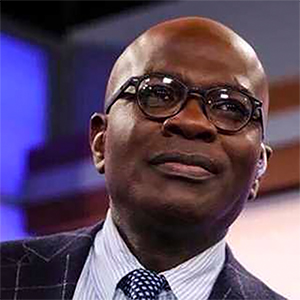
Daniel DePetris is a fellow at Defense Priorities and a foreign affairs columnist for the Chicago Tribune.
___
©2025 Chicago Tribune. Visit at chicagotribune.com. Distributed by Tribune Content Agency, LLC.



















































Comments