Iran war pushes diesel – the economy’s lifeblood – to record high prices, with no relief on the horizon
Published in Science & Technology News
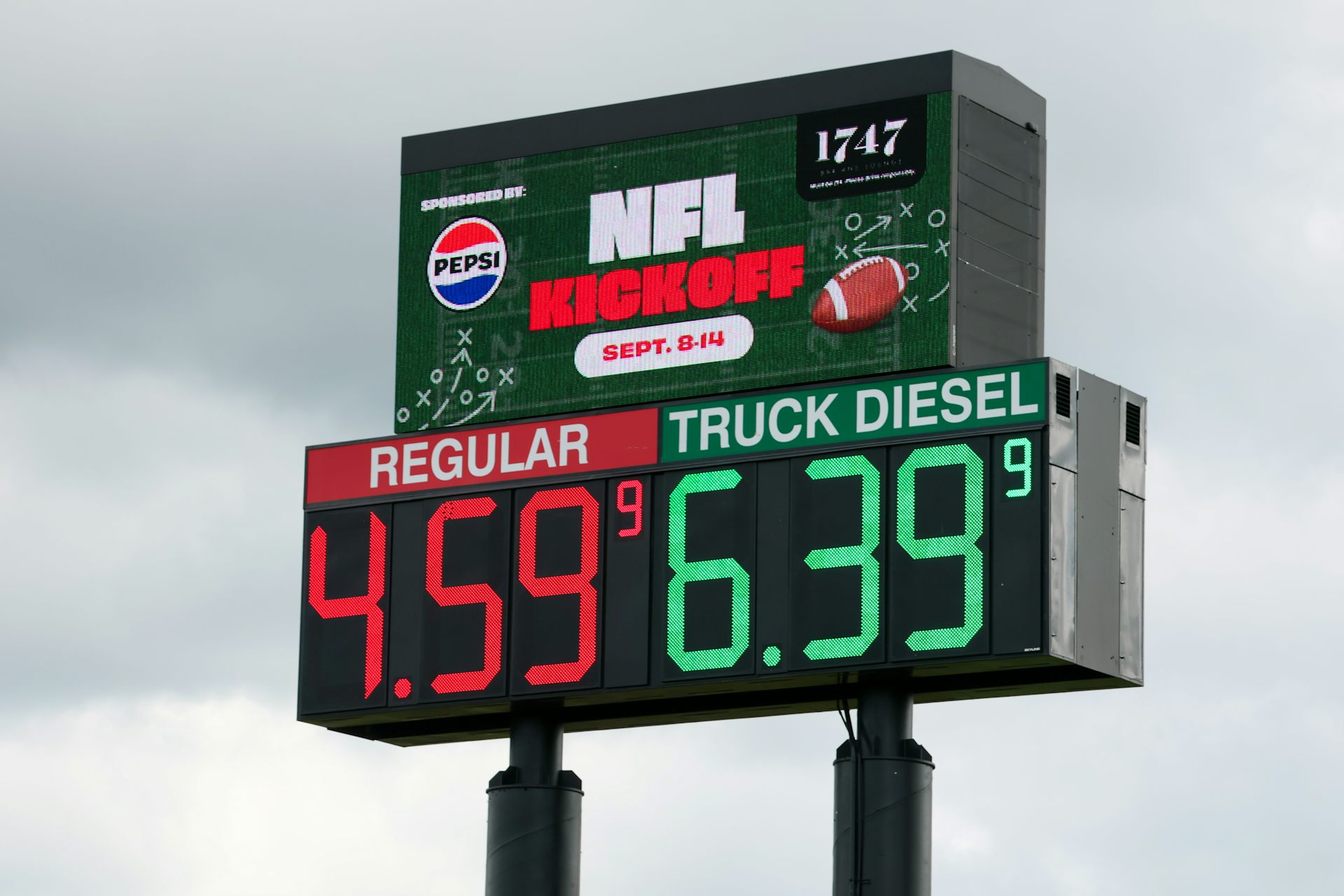



Diesel fuel prices in the U.S. continue to break all-time records, hitting $6.28 a gallon as a national average on Sept. 14, 2026, and they aren’t likely to come down anytime soon. Because diesel is the fuel for freight transportation, farming and construction – and is related to a key heating fuel – the effects are set to spread across the entire U.S. economy.
The inflation-adjusted price of diesel in late August was about as high as it was in 2022 and has likely risen further. There are still three factors that we, scholars of U.S. and global energy markets and supply chains, see that set the stage for prices to remain high and potentially climb even further.
Two of these elements – environmental protection regulations on oil refineries and Russia’s war with Ukraine – have been building tension for years. But the situation has been pushed into a crisis by the U.S. war against Iran, which has closed the Strait of Hormuz to a large percentage of oil and refined products shipments for more than six months.
Amid that crisis, U.S. oil refineries are making lots of money.
In mid-September 2026, diesel prices were up 67% over September 2025’s monthly national average of $3.75 a gallon, and they have risen sharply since. In January 2026, before the U.S. and Israel first attacked Iran in late February, the average diesel price in the U.S. was lower, at $3.52 a gallon – meaning that diesel prices have jumped more than 78% since the war began.
In part, that’s because the country, and the world, have been losing diesel refining capacity for many years and can’t just ramp up production to fill the shortages.
Starting in 2006, U.S. federal regulations were phased in that required refiners to produce diesel fuel with far less sulfur than had previously been allowed. The regulations were intended to reduce air pollution and acid rain precursors mainly from trucks and buses. The resulting fuel was much cleaner. In 2014, the rules were applied to locomotives and marine vehicles.
U.S. refineries had to install expensive equipment to comply, which took years and billions of dollars. This, in turn, increased costs between 5 and 9 cents per gallon. And the fuel contains slightly less energy per unit of volume – so a larger quantity of low-sulfur diesel is required to meet the demand.
Only one refinery, in Galveston, Texas, has been built in the past 50 years, and at 45,000 barrels per day it meets less than 0.2% of U.S. demand. In 2025, two refineries shut down due to poor economic performance. And since 2020, more than a dozen others have converted to producing renewable diesel to take advantage of federal and state biofuel incentives, but that conversion can cut the amount of actual fuel they produce at least in half, according to our estimates.
As a result, the remaining refineries are running flat out. Crude going into refineries reached about 17.5 million barrels a day in late August, and refineries were operating at nearly 98% of their maximum capacity – the highest level since 2018. Even so, output of distillate, which includes diesel and related fuels such as heating oil and jet fuel, was lower than in 2025.
Distillate inventories held by refiners, distributors and retailers fell to about 103 million barrels by late August, the lowest for that point in the calendar since 1951.
As U.S. inventories of diesel fell in August, the country’s diesel exports hit a record high as the global market sought to fill supplies normally provided by Russia.
Historically the world’s second-largest diesel exporter after the United States, Russia banned exports of diesel on July 9, 2026, to ensure supplies for its military. In September, the country extended the export ban until the end of 2026 in the wake of Ukrainian drone strikes on Russian refineries.
Middle Eastern refiners, also key to global diesel supplies, have scaled back production because of disruptions from the war with Iran.
Together, these forces mean the supply for diesel is very tight.
On Sept. 15, 2026, U.S. Senate Majority Leader John Thune proposed the U.S. ban diesel exports to increase domestic availability.
Even before the crisis in the Persian Gulf, the U.S. Energy Information Administration reported several factors were pushing diesel prices upward, including large exports to Europe, a cold winter in the Northeast in 2025-26 and high freight demand.
With the war continuing, refinery companies are taking advantage of the low supply – and their inability to make a whole lot more diesel – to charge more than ever for diesel fuel.
By late August, short-term profit margins for making diesel – called “crack spreads” in the industry – surpassed $100 per barrel for the first time ever, clearly showing demand for the fuel is well outpacing supply, as well as demand for crude oil itself.
What this means is that truckers, drivers and shipping companies are paying more for diesel – costs that are passed on to consumers. At the same time, refinery companies are seeing large profits.
The vast majority of the diesel fuel used in the U.S. is for transportation, mostly trucking. Other significant users are the railroad, agriculture, construction and marine industries.
A congressional Joint Economic Committee analysis in September 2026 found that higher diesel prices added more than $1.4 billion to the cost of planting major U.S. crops in 2026 versus 2025, a 63% increase, with Illinois, Iowa and Minnesota hit hardest. Because nearly every retail item travels by truck at some point, the diesel spike also feeds slowly into broader consumer inflation.
And there’s one more hit coming: Heating oil, which is chemically closely related to diesel, is a key heating fuel in the northeastern U.S. The latest projection from the Energy Information Administration expects national distillate inventories to fall below 100 million barrels in September and stay at that level through much of 2027. That’s lower than it has been since 2021, and heating oil prices for the coming winter are already up 30% or more.
The Middle East conflict is having wide-reaching implications. While crude oil prices are now above $100 per barrel, it is diesel, the fuel that much of the economy runs on, that is feeling the greatest stress.
And as refiners run flat out, any interruption would reduce production, as happened after a power outage at a Mobil refinery in Illinois on Sept. 13.
With falling stockpiles, even a sudden end to the Iran war is unlikely to yield significantly lower prices anytime soon.
This article is republished from The Conversation, a nonprofit, independent news organization bringing you facts and trustworthy analysis to help you make sense of our complex world. It was written by: Morgan Bazilian, Colorado School of Mines and Jamie Webster, Colorado School of Mines
Read more:
It’s not just high gas prices – inflation is now spreading through the US economy
Suspending federal gas tax wouldn’t save drivers as much as they might hope – here’s what goes into the price of a gallon of gas
Why do we use gasoline for small vehicles and diesel fuel for big vehicles?
In addition to being a fellow at the Payne Center, Jamie Webster also works in the Energy practice at Boston Consulting Group, which assists companies around the world across all energy types.
Morgan Bazilian does not work for, consult, own shares in or receive funding from any company or organization that would benefit from this article, and has disclosed no relevant affiliations beyond their academic appointment.







Comments