The Bali Hai Boys and Tahiti's Overwater Bungalows
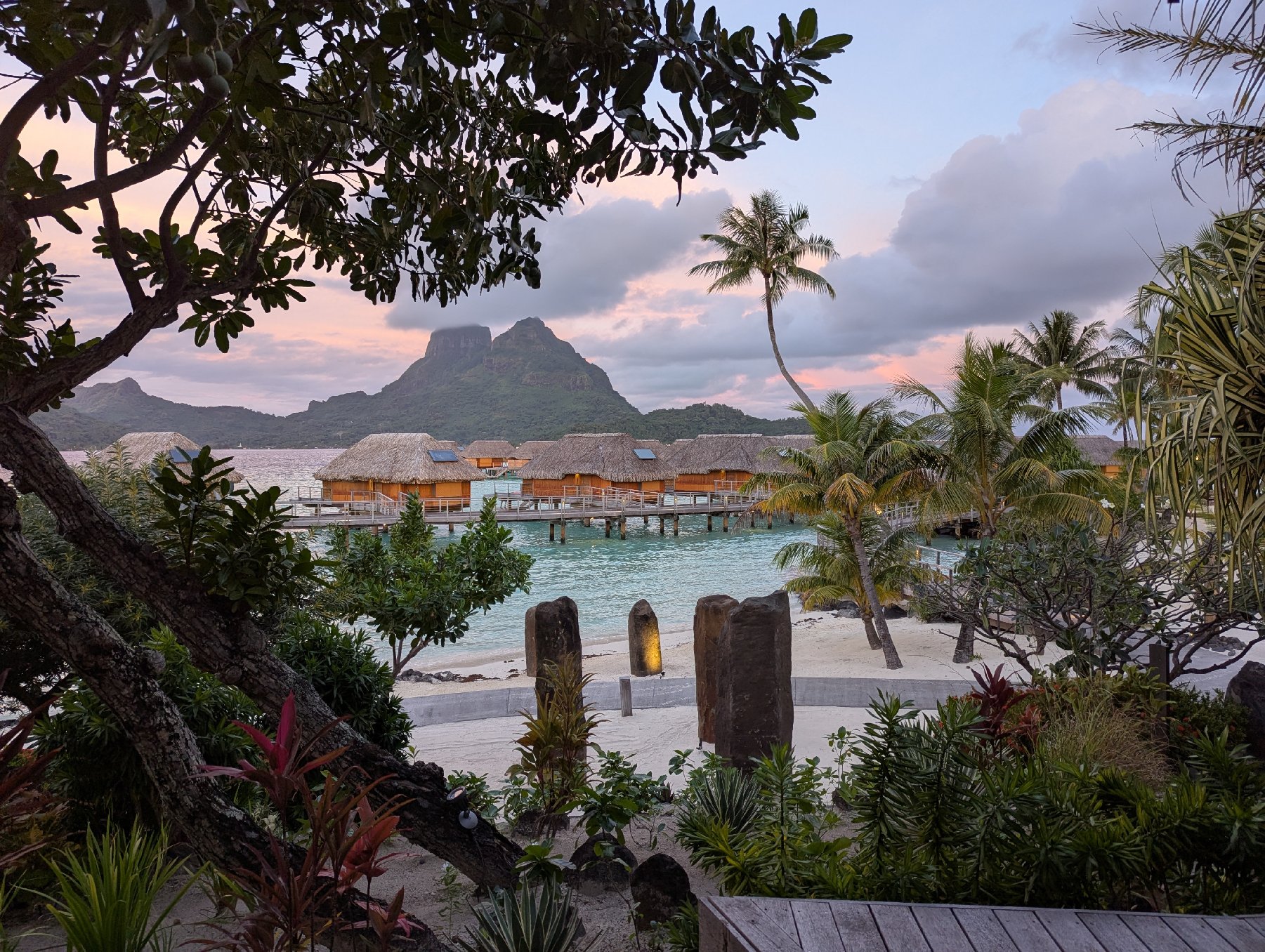
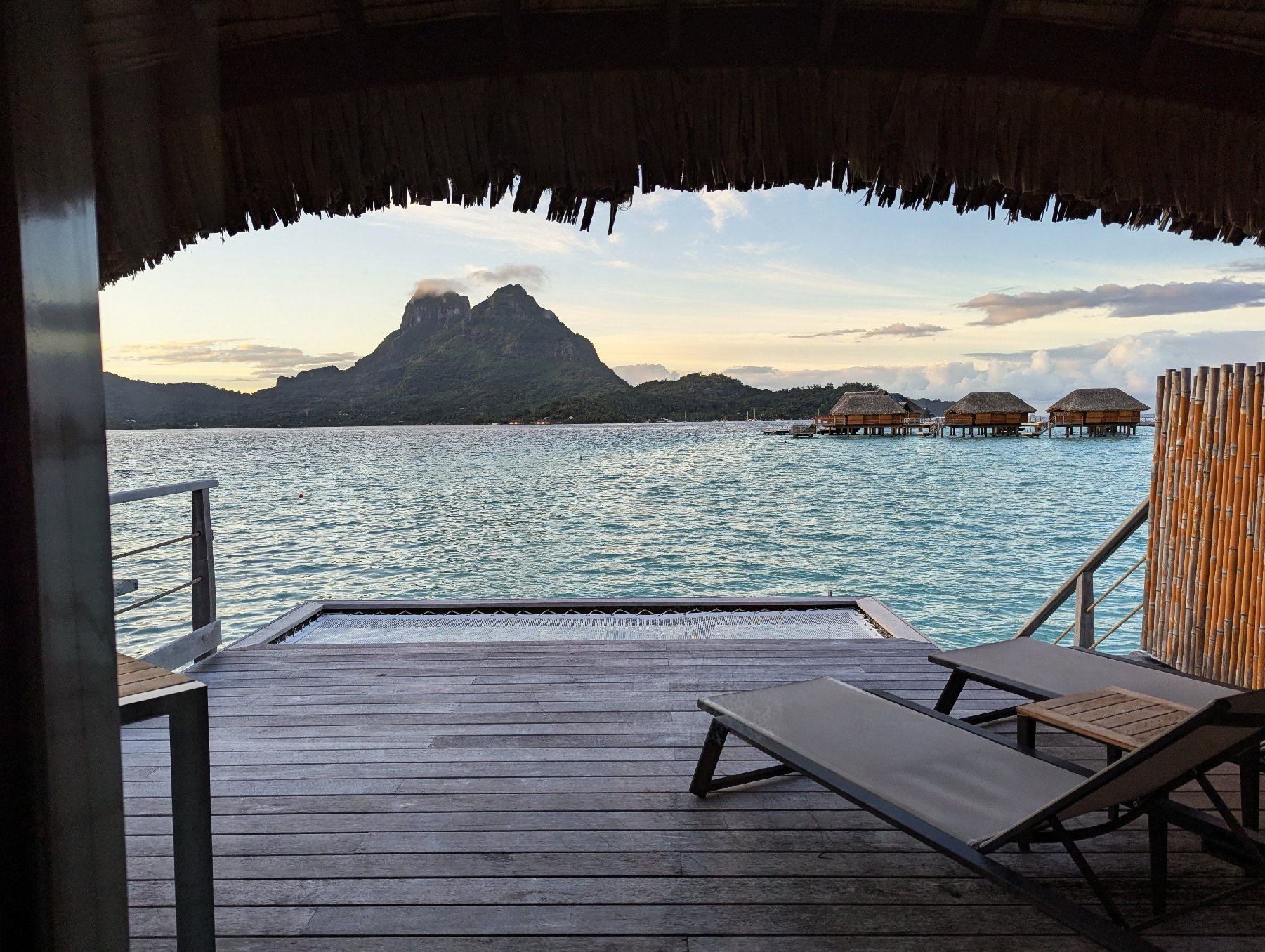
Dreams really do come true, I discovered during a visit to Tahiti, isolated in the middle of the South Pacific Ocean. Just the thought of it evokes images of guest rooms unique to this utterly romantic part of the world: thatched bungalows built over lagoons. Like the Eiffel Tower became the symbol of France, the overwater bungalow is the icon of Tahiti.
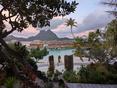
While I was walking on the beach at sunset, a scene stopped me in my tracks: brilliant skies casting a magical light onto the overwaters -- as the bungalows are also called. Then a local told me that the first overwater here was built by the Bali Hai Boys. "They were American," she said.
That begged the question, "Whaaat?"
The story begins with 35-year-old Hugh Kelley, a Los Angeles lawyer and avid sailor. In 1959 a trans-Pacific yacht race from L.A. to Hawaii changed his life forever. After the race and already halfway to then-unknown Tahiti, which had no commercial airport until two years later, his inner explorer urged him to keep sailing. Suffice it to say, he was captivated by the island's natural beauty, its people and their way of life.
Upon returning from his expedition, Kelley convinced his two best friends and University of Southern California fraternity brothers -- stockbroker Jay Carlisle and Donald McCallum, who was running his family's lumber business -- to swap their careers for adventure and entrepreneurship.
With their resources, they bought land (a valley) on Tahiti's sister island of Moorea to start a vanilla farm. But when they learned that the climate there was not suitable for growing vanilla beans, that dream came to a halt.
They were not discouraged.
The only hotel on Moorea was small, run-down and needed repair. Even though the trio had never worked in hospitality, the owner of the property let them take it over.
Fearless and armed with their individual skills (Kelley loved building and working with his hands, Carlisle was the numbers guy and McCallum had experience as a business owner) they repaired the property, added more rooms and renamed it Bali Hai, a tribute to James Michener's Pulitzer Prize-winning 1947 "Tales of the South Pacific." His stories about the mythical Bali-ha'i island were partly autobiographical and written while he was stationed in the Pacific theater during World War II. Bali-ha'i was the "unattainable place of innocence and happiness."
Kelley, Carlisle and MacCallum did everything at the Bali Hai from reception, cooking, bartending and entertaining. They took guests out on canoes to fish and experience the spectacular reefs and sea life up-close. They also spoke fluent Tahitian as they fully embraced the culture. Their spirited personalities earned them endearment as the Bali Hai Boys.
The land they bought wasn't for naught -- instead of vanilla, they grew fruits and vegetables for the hotel.
As destiny would have it, Life magazine reporters who were working in the South Pacific stopped in Tahiti and stayed at the Bali Hai. Their fascination with the exotic lifestyle that the Bali Hai Boys were living turned into a seven-page spread in one of America's most popular magazines. "An Enchanted Island," appeared in the Dec. 21, 1962, double issue that cost 35 cents. (It's worth noting that Tahiti, Moorea and Bora Bora, are the three largest islands of French Polynesia's 118 islands. This immense archipelago and collectivity of France is commonly known as Tahiti, the largest island and home to its capital, Papeete.)
And whether the article was also intended to attract people to the island, it happened. But with the hotel on a small beach between the ocean and the road, there was no more land to build.
Enter the sea. Literally.
Traditional fishing huts on stilts over the water have been used in Tahiti since ancient times to source food from the sea while providing shelter and a home base for fishermen. The small, simple structures were the inspiration the Bali Hai Boys needed as they presented a proposal to erect fishing-hut style guest rooms that would be environmentally sensitive and blend with the existing landscape to local building officials.
The overwater bungalow was born.
Indeed, learning this backstory brought new meaning to my stay in Bora Bora, less than an hour's flight from Tahiti. The geography here -- a shallow turquoise lagoon protected by a coral reef and majestic Mount Otemanu -- would be optimal for the rare overwater experience.
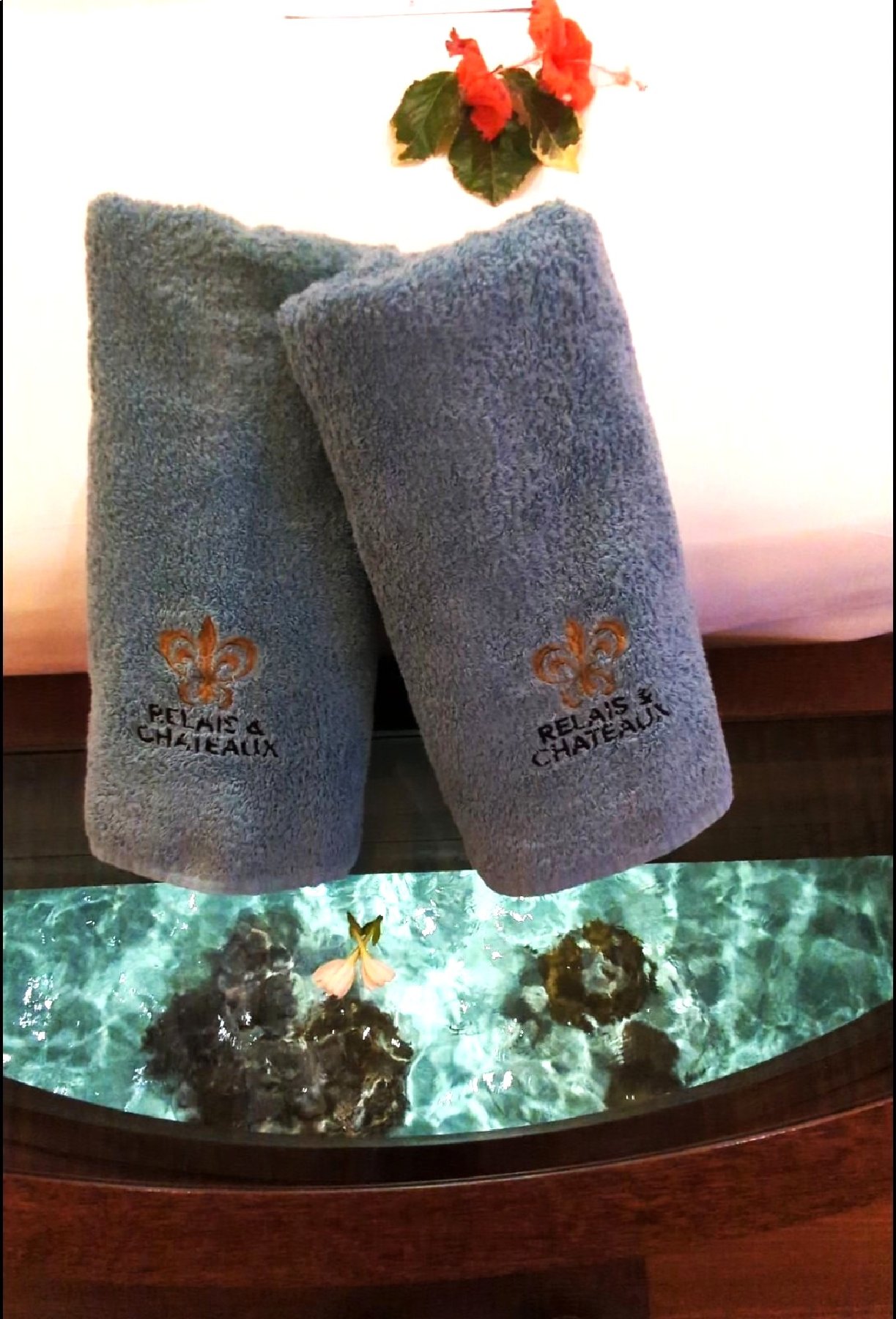
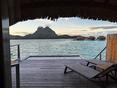
After dinner at Le Bora Bora resort's restaurant on the beach, I meandered out to my overwater in the darkness of the night. Mount Otemanu's silhouette guided me toward the lagoon and the end of the wooden walkway on stilts. Soft lighting from underneath the thatched huts and water lapping against the pillars were the stuff of dreams. The interior was posher than the Bali Hai Boys' original legacy design. But they are lauded for their vision of including floor cut-outs for guests to watch the mesmerizing sea life from inside.
Overwater bungalows grew in popularity beyond Tahiti, including other South Pacific islands, Fiji, Southeast Asia, the Maldives, the Caribbean and Mexico.
And while the Bali Hai Boys had intended for the first overwaters to be budget-priced because of their tiny size and, ahem, inconvenient location, today's storybooklike structures facing the sea, not the land, are found at luxury resorts as well as midrange properties throughout French Polynesia.
There's nothing more extraordinary than to experience the overwaters in Tahiti -- where they were born.
----
WHEN YOU GO:
Learn more about Tahiti's overwater bungalows: Tahiti Tourisme: at tahititourisme.com.
Where I stayed: Le Bora Bora by Pearl Resorts: leborabora.com.
========
Athena Lucero is a freelance writer. To read features by other Creators Syndicate writers and cartoonists, visit the Creators Syndicate website at www.creators.com.
Copyright 2025 Creators Syndicate, Inc.



























Comments