Thomas Haden Church talks Texas and his new film, 'A Dog's Perfect Christmas'
Published in Entertainment News
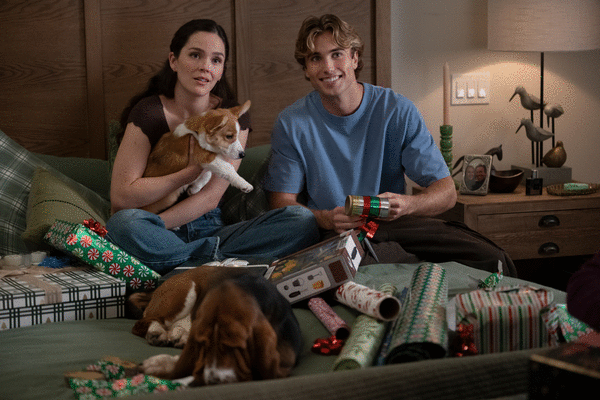
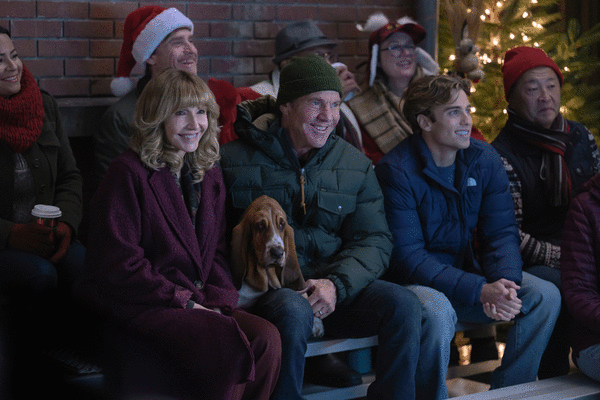


FORT WORTH, Texas — Thomas Haden Church has some tales about Texas.
The 66-year-old actor was born in California and moved to the Lone Star State as a toddler with his mother. He spent some of his early years living with his grandparents in Fort Worth, before his mother remarried and moved the family to Laredo. He found himself in Harlingen for his high school years and later attended the University of North Texas.
Church did move to Los Angeles to pursue his acting career, appearing in projects like “Wings” and “George of the Jungle” in the mid to late 1990s. He later landed a Best Supporting Actor Oscar nomination for “Sideways” and played Marvel villain Sandman in “Spider-Man 3.”
It was around turn of the century when he bought a ranch in Central Texas, where he’s hung his hat ever since.
The Star-Telegram recently spoke with Church about Texas and his new film “A Dog’s Perfect Christmas,” released Wednesday, Nov. 4, on Netflix.
He voices a dog named Winstead in the film, which is about a family facing turmoil over the holidays and a new dog that helps unite the household. The movie is the latest in the “A Dog’s Purpose” film series.
There are no spoilers for the film in the conversation, it’s more of a free ranging discussion about Texas and Church’s career.
[This interview has been edited for clarity and length.]
Q: You’ve been ranching for most of your life. Dogs can be good companions, but also help work cattle and do other things around the ranch. What’s your relationship with dogs at this point in your life?
A: Yeah, I mean, I’ve been in situations over the years ranching when sometimes we’d use dogs. They can be helpful. But if you ever try to work with cattle that are not accustomed to dogs, they can really be a problem. Over the last two years, the cattle came over from a neighboring ranch that people had lost their lease, and I kept having to capture the cattle in my pen. Then whenever we go to load them the first time, he kept letting his dog out and his dog was creating mayhem. Sometimes it can be a real hindrance.
But the ones that are very well-trained, yeah, they can be immensely helpful. I don’t have dogs. I had dogs when I first bought my ranch, but I didn’t use them to work the cattle. I just had them. They both got into situations, and you know, they had to go away.
Q: This film seems like a unique opportunity, because you get to voice a dog and say dialogue you normally wouldn’t say. What made you excited about the role?
A: I’ve done voice work, well, even in high school. I was on a radio broadcasting team that won a state championship. Then, when I was 17, I got hired at a radio station in Harlingen, Texas. I’ve done voice-over work in some regard, doing announcing, radio ads, all of it. Then I got into doing voice-overs professionally in my 20s in Dallas and Houston and Austin. That’s actually kind of what led to me moving to L.A. really to pursue voice-over, but then kind of turned into acting. But, I just have always loved it. I just I love being in a booth, I like giving voice performances. There’s not a lot of it anymore, especially for a man my age, a Caucasian man my age. A lot of it is gone. Look, it’s all cyclical. It’s fair that it's kind of trended more away from, like I said, white men my age. Unfortunately, there’s a lot of AI that is moved into the voice-over field. Commercial work, there’s a lot of AI voicing, which is really a tragedy.
Q: If someone’s voice is taken by AI and used somewhere, they don’t get paid for that or really have any control over that. Unfortunately, AI is here to stay, but I wish we could have some protection against it.
A: Yeah. Are you in Fort Worth, Brayden?
Q: Yes, I’m here in Fort Worth.
A: I lived in Fort Worth when we moved. We moved to Texas when I was 2, and my grandparents lived in Fort Worth, so we stayed with them for a small period of time. Then my mother, we got our own home, but I moved all over Fort Worth. Then eventually my mom remarried and we moved to Laredo, then to the [Rio Grande] Valley. But I went to school in Denton [at the University of North Texas], and my grandparents lived in Fort Worth until they both passed away.
Q: Do you have any big memories from growing up in Fort Worth at that time?
A: It’s funny. I was talking about trick or treating with my wife in Fort Worth, in the neighborhood that my grandparents lived in. But I don’t want to derail whatever questions you have.
Q: No, you’re fine. I love chatting about Texas.
A: Well, I always, even when I was still in school in Denton, I started working in Dallas, but I just always loved Fort Worth. I just always loved it. It was shifting down from working, I worked in downtown Dallas, and I just always enjoyed coming over there. My grandparents lived over in an area called Western Hills, which is I think kind of considered to be inner city. I went to an elementary school out there, which was Western Hills Elementary [School] for I think a year. Then we moved and I went to a different elementary. Then ended up finishing my elementary at a school, J.T. Stevens Elementary [School], which is closer to Southwest High School. I don’t remember the name of the neighborhood, but then we moved. I did my middle school years in Laredo. I just always loved it. I always loved visiting my grandparents, just always very fond of Fort Worth.
Q: You’re based in Central Texas, do you make your way up to the Dallas-Fort Worth area any?
A: No, not much. My parents are both gone, they lived in Aubrey. If you know where that is. That’s where my parents lived. They actually moved to Aubrey and built a house there because of me going to school at [the University of] North Texas. They would come visit and they just loved the area, so they ended up living in Aubrey for quite a while until my father passed away. Then my mom moved to Austin to be closer to my one of my sister and one of my nieces and her family. I have a brother who’s an attorney in Dallas, but my sister-in-law is head of the, I think, it’s the theology department at TCU. They have a ranch out here in Abilene, so they pass through Fort Worth a lot.
Q: So much has changed in Fort Worth as far as filmmaking goes. Taylor Sheridan brought several of his shows here like “Lioness” and “Landman.”
A: Yeah, I mean, it’s become huge. In fact, I think Fort Worth has probably taken over the mantle that Austin held forever as sort of being the film-centric city. But I think there’s a lot more activity around Fort Worth. They do “The Madison” there too, don’t they?
Q: Yes, they do.
A: Does Taylor Sheridan have, I know he’s got a ranch out in Bosque County, but does he have a place in Fort Worth?
Q: I’m not sure about Fort Worth, but he has a ranch in Weatherford, which is right next to Fort Worth.
A: Yeah, I know Weatherford. We used to go bird hunting out there. I know that whole area very well. But I just didn’t know if he lived in Fort Worth or had any production offices in Fort Worth.
Q: He was part of a group that opened a 450,000-square-foot production facility in north Fort Worth last year.
A: Is that out there close to the racetrack?
Q: Yes.
A: Yeah. Well, I guess we should talk about the movie.
Q: I mean, have you ever met Taylor before? Or, talked about working together?
A: No, you know what? I have never met him. I think he started acting in Texas, but I think by the time he got started, I had already moved. In fact, I know that’s the case. He’s 10 years younger than I am, and by the time he got started. I had already moved to L.A.
I was never an actor in Texas. I just did voice-over work. A guy that works with me, he’s my writing partner. He was an actor in Texas, and he remembered in the ‘90s he would see Taylor Sheridan at auditions. I think he moved to L.A. pretty quick when he was in his 20s. But, he’s a good actor and he’s a brilliant writer. I mean, “Sicario” and “Wind River,” I love. I never really watched a lot of “Yellowstone,” but I liked “1883” and “1923” a lot. I love “Landman” because that’s kind of a little bit of my history. I dropped out of high school when I was 17, and I worked in the oil fields in South Texas. I did a movie called “Accidental Texan” that came out a few years ago, that essentially I was a landman and an oil driller. “Landman” definitely was interesting. Plus, I’ve worked with Billy Bob [Thornton] a couple of times and really like. I think Taylor’s a brilliantly gifted writer, and I think he’s an excellent actor too.
Q: Seems like you two would make a good match.
A: I know that I’ve been pitched to him, and I guess it just wasn’t for the right thing. I mean, I know that he’s aware of who I am because I’ve been told that by people. But if it happens, it probably would be cool. If it was the right fit for him and for myself. The dude’s a heavyweight champion of writers for sure.
Q: Getting back to “A Dog’s Perfect Christmas,” you voice a basset hound in the film. I had basset hounds growing up and they’re known for having these sad-looking faces and a lot of heart. When it came to the voice, did you use any of the characteristics in the performance?
A: Not really. You know that film series, which I and my daughters really love, they both were like, “You got to do it. You have to do it,” when they asked me to do it. My daughters love “A Dog’s Journey” and “A Dog’s Purpose,” and I really liked Josh Gad and what he did [voicing the dog] in the first two, and then what Alfred Molina did with the third one. That’s pretty good company to be associated with. Of course, Fred and I, both our characters are in “Spider-Man: No Way Home.”
The focus of how you style the performance, it’s not as much about the dog or like the breed of the dog, but about the humanity and the heart of that character of Winstead. Cathryn Michon, the co-writer and director, she was very emphatic on just bringing the warmth and the humanity of how this dog is really almost a human presence in that family, along with the other dog, the corgi. They’re members of the family and very important in helping the family.
Q: The film reminds me of something my mom said in that a dog might be a small part of your life, but for them, you’re their whole world. I think dogs can feel when they’re human is sad or going through things.
A: Yeah, and we definitely address that, especially my character. Winstead, he can feel when Dennis Quaid’s character is going through something, or when the parents are going through something, or the daughter. It’s funny because we have some neighbors that have basset hounds and I see them all the time. What is always amusing to me is how playful they really are.
Q: I have a time for one more question: What do you want people to take from the film?
A: Oh, you know, it’s a holiday family movie. It touches on some heavier themes that families have to deal with. Not always the best time of the year to have to deal with some of the bigger issues that can face a family. In this story, in this script, I kind of really like that. I like the juxtaposition of the holiday season and the family going through what they’re going through. That’s when individuals show their true character. When the rest of the world is celebrating, this family, they’re having to deal with some issues, but you always hope that happiness and love will prevail. By the way, they’re not holding you at 20 minutes, Brayden. I told them to give 30.
Q: Alright. You talked about voice acting earlier. Do you find it to be more freeing or challenging than on-camera acting?
A: No, it's definitely not confining or restrictive. Like I said at the beginning of our conversation, I’ve done it for so long. I mean, for all intents and purposes, 50 years of my life. I’m very comfortable in a booth with a microphone. Over the years, I’ve done big animated features like “Over the Hedge” and “Charlotte’s Web.” Sometimes all you have is your voice characterization, which can be really liberating in a certain way. That this is all I have, so I’m going to use it to the fullest sort of range and extent that I can find. I don’t have my face and my body to assist my voice or my eyes to assist my voice.
I always found it to be kind of freeing and very exploratory just to dig all of that out with just your voice, especially in “A Dog’s Perfect Christmas.” With Winstead, I really felt like we dug deep to get a lot out of that character. Because in a weird way it’s a tandem, not a weird way, in a truthful way. It’s a tandem because he has the eyes and he has the body and he’s doing the physical performance, and I have to support that with the voice performance. Obviously, it’s his inner voice. I mean, Winstead barks when he wants to [laughs], but it’s his inner voice that I’m responsible for.
Q: Your voice is singular. This may sound like a silly question, but do you remember when you first recognized that you really might have something with this voice? Or, did you always think of it as a part of you?
A: My voice changed so dramatically, I want to say it was probably around the time I was in the eighth grade. Whenever you’re kind of starting out puberty, when you’re, I don’t know, 12-13 years old. I mean, clearly there’s a lot of variables. But I do remember my voice really started cracking pretty dramatically, I had a teacher that nicknamed me “Froggy” because sometimes my voice would just drop into this croak. I would say by the time I was a freshman or sophomore that it had really kind of matured. [Laughs] I would call in whenever we wanted to skip school. This was more like when I was a junior and senior. I would call in and pretend to be people’s dads and call the school secretary, and say like, “It looks like Jim’s not doing great.” They always bought it. I never got caught. That was the beginning of my like real dramatic voice performances. I’ve heard other people say the same thing. What’s his name? The actor that voiced Sweet Tooth in “Twisted Metal.”
Q: Will Arnett?
A: Yeah, Will Arnett. I heard Will Arnett talking about the same thing that his voice dropped dramatically when he was in high school, and he would call in and pretend to be his friend’s father.
Q: You were a good friend to have back then. I’m not feeling well, so I’ll get Tom to call the school.
A: No, we just wanted to cut school and go surfing. That’s when I was doing it, not when people were actually sick [laughs]. If they were actually sick, they wouldn’t need me. My last few years of high school in Harlingen, which is only 25 miles from the beach.
Q: I’ll close with this. You were attached to a show called “The Texanist,” based on the Texas Monthly column. That was announced back in 2020, is that still in the works?
A: No. We went around and around on it for about a year. I was attached to it as an EP [executive producer]. We started that right around the beginning of the pandemic and we kind of went around and around on it until ‘21. Then it just ran out of juice. The guy that wrote the pilot, Rob Long, he moved on to other things, and obviously I did too. I did three movies that year, and then “Twisted Metal” in ‘22. I think there could be an iteration of that. I’ve always loved the column, and I’ve always enjoyed the satire of his writing. But I think they gave up on it, maybe, which is unfortunate.
©2026 Fort Worth Star-Telegram. Visit star-telegram.com. Distributed by Tribune Content Agency, LLC.







Comments