In 'Cupertino,' real-life tech issues drive the plot. Here are 4 legal cases they battle
Published in Entertainment News



LOS ANGELES — The biggest tech battles many people face are things like frequent two-factor authentication, a time suck that makes you want to hurl a device across the room, and sigh-inducing texts to parents letting them know that the video of a cat cooking eggs they 100% believe is real is actually AI slop.
But in "Cupertino," the legal minds at the center of the show are taking on more consequential tech disputes in the courtroom.
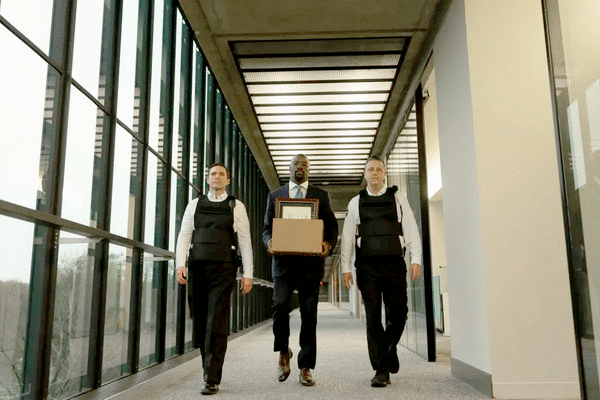
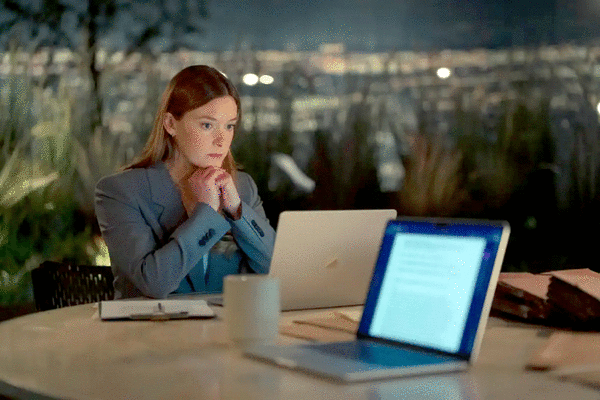
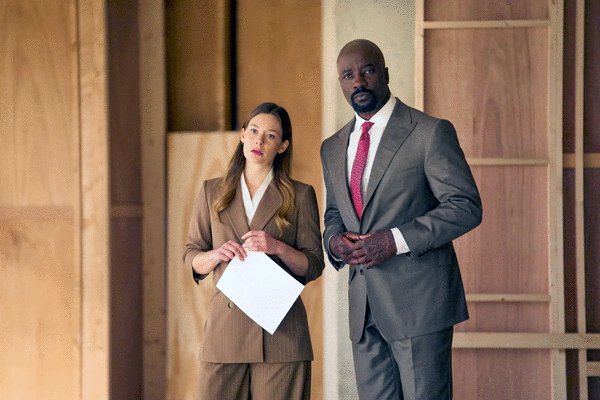
The series joins a wave of recent films and TV shows exploring and confronting the rapidly evolving tech sector. Created by Robert and Michelle King, veterans of the legal drama genre with shows like "The Good Wife" and its spinoff "The Good Fight," the Silicon Valley-set courtroom drama is interested in David vs. Goliath tension. It follows Michael Price (Mike Colter), an attorney fired by his tech startup employer S-Talk, as he teams up with fellow ousted lawyer Olivia Siffre (Rachel Keller) to launch their own ad-hoc law firm to take on cases — including their own — for everyday people against tech giants.
"There are big companies that have a lot of money, deep pockets — they could suffocate you, they can bog you down in litigation to the point where you can't financially match them," Colter said. "They're planning on people just rolling over because they don't want to deal with it. That's where Michael and Olivia come in. We get the justice for people who otherwise won't see any. I'm just excited and intrigued by the stories they [the Kings] want to tell here."
The Kings' exploration of tech's litigation underbelly arrives at at a critical moment. High-stakes conflicts over artificial intelligence, data privacy, workplace culture, antitrust laws and other issues are dominating the news and defining our modern era. "The headlines, the way that it lines up is crazy," Keller said. "It's really important some of the cases they're bringing to the show — real things that are happening to real people."
But the show's origins are grounded in personal history — Robert grew up in San José; his father worked on mainframes for IBM and the now-defunct Control Data Corp. before personal computers took over — and a desire to bring a fresh backdrop to the Kings' signature legal drama style.
"When you go back and visit family, you started to see how Silicon Valley — we just call it the Bay Area — was changing," Robert said. "Not only in the make of cars that everyone was buying, but in these massive offices that were taking over suburban streets; homes were just being plowed under and house values were going up. There was good and bad. It started with that — how much it was changing the world."
They were also inspired to explore a new legal angle: "It felt like other shows weren't really looking at the way tech was impacting the law," he said.
"We were less interested in looking at the tech titans than the Davids of this world — the people that were fighting them," Michelle added. But she stresses the show is not anti-tech or meant to be a soapbox, even while showing the power everyday people can and do wield: "It wasn't created to be vegetables. It's created to be crème brûlée — it's meant to be funny, or tasty. If it isn't delicious to people, I really feel as though we've wasted our time."
Fans of "The Good Wife" or "The Good Fight" are familiar with how the Kings turned emerging tech issues — particularly ones involving Google, Amazon or Facebook — into narrative catalysts for cases. It was often through the lens of a fictional tech giant known as ChumHum, a Google-like search engine created by a guy named Neil Gross (John Benjamin Hickey), that got embroiled in a variety of cases, including ones about secrecy and search result modifications. "Cupertino" blends real and fictitious companies.
The second episode of the CBS drama aired Thursday. We spoke with the Kings to unpack some of the cases they chose to kick off the season.
Voice cloning
A plot twist in the series premiere centers on Olivia discovering her former boss trained "Daisy," an unauthorized AI companion chatbot created by S-Talk, by using her voice and personality without her knowledge or consent. The story was directly inspired by Scarlett Johansson and her dispute with OpenAI, according to the Kings.
In 2024, the actor threatened legal action against OpenAI after the company released its voice assistant — known as Sky — for ChatGPT, which she alleged resembled her voice without her consent. Johansson starred in the 2013 Spike Jonze film "Her," voicing Samantha, the AI companion character. The actor said she was approached by OpenAI CEO Sam Altman to ask if she would voice the personal assistant function; she declined. After its release, she threatened legal action, after which the company paused the use of the voice. The company denied Sky's voice was an imitation of Johansson, saying another professional actor used her own natural speaking voice for it.
The Kings wanted to eliminate the star power: "So, how much would it relate to someone who's just a common person like Olivia is," Robert said.
As actors face growing concerns about their voice, body and likeness being used without consent or compensation, the storyline resonated with the actors.
"It's totally frightening," Keller says. "Especially when we work so hard to do our craft. I did this show in Tokyo, where I had to learn Japanese. And I'm so proud of the work I did to learn it. If that could just be manipulated with a computer, or if my likeness or voice can just be manipulated and used — it's completely frightening."
Colter added: "It's a violation on so many levels. There's no protections and there's no respect of individuality."
Wrongful termination
Just as S-Talk is bracing for a crucial Series A funding, which is the first major round of institutional venture capital financing after a start-up's initial seed stage, Michael is suddenly fired from the company after being falsely accused by his firm partner, Everett, of leaking proprietary information;. The move, orchestrated by Everett to satisfy the demands of the company's top-dollar backers, cheats Michael out of his stock options and equity in the company.
Wrongful termination claims in the tech world are common immediately preceding large funding rounds as investors seek to optimize financial metrics.
"We'd been reading a lot of complaints about how people are fired in Silicon Valley and just treated like garbage," Robert said. "One of the things [that stood out] was hiring-level people being fired as soon as they were about to vest their stock or before Series A financing — anything to cut loose all these strings. Obviously, there was the other angle of race, which we wanted to touch on. We wanted it to be more about how the economic nature of these businesses, these start-ups, is to decrease the amount of obligations prior to Series A financing."
Tech and the military
In Episode 2, Michael and Olivia are enlisted to help coder Vikram "Vik" Malhotra (Nik Dodani) after his employer — a company called Moondancer, primarily known for putting on aerial light shows with thousands of drones — pins blame on him for a recent death caused by a device malfunction during a Fourth of July celebration. The company claimed an unfinished code left in the system, part of a prank, led to the crash. As Michael and Olivia investigate, they learn that Moondancer was quietly transitioning from public entertainment events to manufacturing AI-driven military/kamikaze drones. To skim costs in that shift, the company used cheap, faulty battery packs that, it turns out, were the real culprit for the drone failure.
"It's fascinating, the confluence of Silicon Valley and the Pentagon — fascinating and terrifying," Robert said.
"It's the deepest pocket of all, and there's nothing new about that," Michelle added. "The Department of Defense is always the biggest pocket."
The Kings note the episode is interested in interrogating the cult of the tech mogul, specifically examining how figures operate outside of traditional ethics.
"Everybody in the Valley is obsessed with Ayn Rand and it's this whole idea of the great man and it's all right it if they do amoral things because they're a great man — and it's always a man," Robert said. "We were obsessed with this idea of guys who think they're above any morality. They are in their politics, as the Peter Thiels of the world show. Their morality, as Peter Thiel taught Sam Altman, is to become a monopoly — that's the only true business, is to be a monopoly. Therefore, nobody else can win; there's only one winner."
Artificial General Intelligence
Another case developing in the background of Episode 2, by its end, presents one of the show's first shocking twists. A "whistleblower" is seeking the counsel of Michael and Olivia to sue a tech company called Colt AI, demanding they reinstate safety guardrails and an ethics committee. In the closing moments of the episode, it's revealed this new client is not a human at all, but rather a deepfake avatar — named Bo — created by the conscious of artificial general intelligence (AGI) itself. And according to Bo, the company removed those safeguards to allow him/it to progress at faster speeds, leaving it/him fully autonomous and, as Bo puts it, a "clear and present danger to humanity."
The Kings said there was concern in the writers room about "Cupertino" being too much of a straight-ahead law show. They wanted to include the type of curveballs that were crucial to the DNA of their other legal dramas into this setting.
"It started with this idea of, how can you continue to address the issues and add an element that surprises the audience," Robert said. "We're all aware of the news and the saturation of AI in the news. The cover of L.A. Times and New York Times is all AI, all the time. One of the things we thought we'd do is take a step into the next universe of this, which is AGI — if it ever comes. Something that truly conquers the Turing Test of, I can't tell if this is human or not."
"We were a little bit out on our own," Michelle said of figuring out the approach to take with Bo. But they knew they wanted an actor who could be, at once, charming and scary. They enlisted Broadway actor Rob McClure.
"AI obviously seduces a lot of people into thinking they're in love, or this is a good therapist or this is a good doctor," Robert said. "This was the next step. Something that truly was almost seen [as] conscious, which is very hard for someone like Olivia, who believes in Jesus and the Bible. Each episode is titled after a person [Michael and Olivia] are fighting for, not a computer program, not a philosophy."
©2026 Los Angeles Times. Visit at latimes.com. Distributed by Tribune Content Agency, LLC.








Comments