NY judge denies case to reopen Columbia University to the public as residents vow to appeal
Published in News & Features
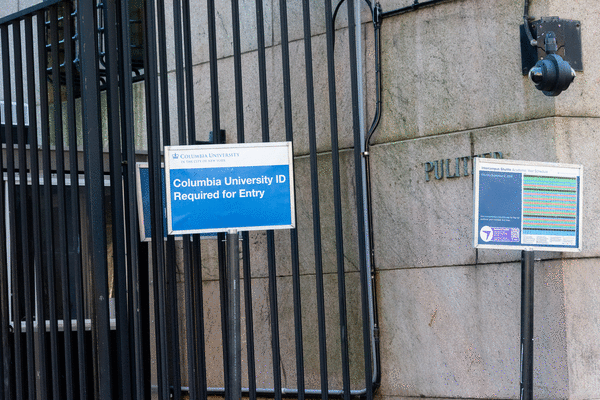
NEW YORK — A New York state judge on Wednesday approved Columbia University’s decision to close a stretch of 116th Street privately owned by the school to the general public, as Morningside Heights residents vowed to appeal.
The campus access restrictions — which limit access almost exclusively to Columbia students, faculty and staff, and their approved guests — were first put in place during the spring 2024 college protests over Israel’s war in Gaza to restore order and protect student safety, college officials said. Years later, the gates remain closed.
Neighborhood residents tried to challenge the restrictions based on a decades-old legal agreement that sold the pedestrian walkway between Amsterdam and Broadway — known as “College Walk” — to the university, but maintained public access to certain facilities like hydrants.
But Manhattan Supreme Court Judge David Cohens said nothing in the agreement granted unrestricted public access, and even if Columbia officials previously chose to do so, it was within their rights to change their minds.
“As it remained their private property, nothing prevented them from restricting access at any time. Petitioners thus fail to demonstrate that they have any claim or right to unrestricted access to College Walk,” Cohen wrote, closing the case.
Morningside Heights residents and local lawmakers have widely panned the restrictions, pointing to how they force Columbia’s elderly and disabled neighbors to take lengthy detours around campus. Some students and faculty have also criticized the prolonged campus closures as an affront to the Harlem community, as well as to protests and free speech.
“My clients and I are very disappointed in today’s decision, and plan to appeal,” said Toby Golick, a lawyer for the plaintiffs. “In the meantime, though, we continue to hope that Columbia will listen to the neighborhood residents, the students and the faculty, as well as many of our elected officials, and voluntarily open the campus.”
The court order comes after Mayor Mamdani tried to tip the scales in the Morningside Heights residents’ favor, changing the city’s official position on the matter after former Mayor Eric Adams opposed the lawsuit. In recent weeks, Mamdani — a Columbia professor’s son raised in Morningside Heights and an advocate for Palestinian rights — has threatened to sue the university if it does not reopen to the public.
In a statement, Columbia welcomed the ruling, while pledging to continue working toward a more open campus.
“We very much welcome the court’s recognition that College Walk is private property and that Columbia may control access to our buildings and grounds,” said Adam Stephan, a Columbia spokesman.
“At the same time, the University understands the benefits of a more open campus, and our Campus Access Advisory Committee has been tasked with providing recommendations on how to further expand access. While today’s decision resolves the claims before the court, it does not end the committee’s important work.”
________
©2026 New York Daily News. Visit at nydailynews.com. Distributed by Tribune Content Agency, LLC.






Comments