San Diego City Council passes a temporary moratorium on data centers
Published in News & Features
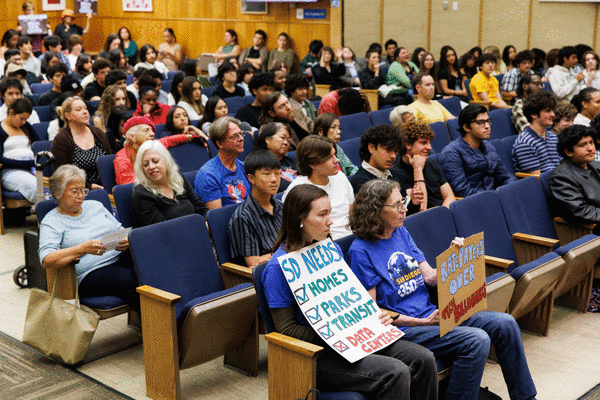
SAN DIEGO — The San Diego City Council, on a 9-0 vote Tuesday, passed an urgency ordinance that places a moratorium on the development of new data centers within the city.
Coming days after an executive order from Mayor Todd Gloria, the moratorium is designed to give officials time to develop policies and recommendations to make sure that data centers align with the city’s General Plan and its Climate Action Plan.
“I appreciate the City Council’s unanimous ratification of the temporary moratorium on data center development,” Gloria said in a statement. “This is a necessary and responsible step to make sure any development does not outpace our responsibility to protect San Diegans.”
The temporary moratorium lasts 45 days but gives the City Council the power to extend the suspension for another 10 months and 15 days. No more than two extensions will be allowed and they will require approval from four-fifths of the council.
The pause “gives us time to start putting the right regulations in place,” Councilmember Marni von Wilpert said. “AI data centers must pay their own way without passing additional electricity or water costs onto our residents. It is already too expensive to live here.”
The moratorium, however, does not figure to directly impact any possible construction of a data center that the Manchester Financial Group is exploring as part of its plans to redevelop the 70.3-acre Naval Base Point Loma Old Town Campus, which is home to Naval Information Warfare Systems Command (NAVWAR).
That’s because NAVWAR is on federal land, beyond the city’s jurisdiction.
Manchester Financial executives have looked at the possibility of a data center to make up a portion of the NAVWAR site, although the group says it is merely one of a range of options on the table. The current development plan already contemplates a number of definitive uses, including 8,900 residential units and two hotels totaling 480 rooms.
The company has floated the idea of a 400-megawatt data center, which would be the largest in California, but Manchester president and CEO Ted Eldredge told the Union-Tribune last week, “We’re not married to that megawattage” and that any possible facility is dependent on market conditions and overall feasibility.
After Tuesday’s vote, Eldredge said in a statement, “We continue to look at a variety of options for the site as we seek to build a best-in-class facility for the Navy,” adding that any proposed plans must go through environmental review before any decisions will be made.
“The City and public will have (the) opportunity to review proposed plans and provide comment,” Eldredge said. “We remain committed to working with the Navy and community stakeholders throughout this process.”
Essential toward driving the boom in artificial intelligence, data centers have drawn increasing scrutiny across the country in recent months.
The facilities house racks of computer systems required to train generative AI models and chatbots. Supporters say data centers can drive cutting-edge technology and actually drive down overall energy costs through economies of scale.
But critics worry the electricity needed to feed data centers will strain the grid and drive already steep power bills in San Diego Gas & Electric’s service territory — with rates at or the near the top of most expensive in the country — even higher. In addition, data centers, in order to stay cool, can suck up large amounts of water.
The moratorium aims to set data center guidelines within the city’s purview.
The pause passed Tuesday includes establishing a working group of as many as 15 stakeholders to develop recommendations for water and electricity demand and potential impacts on utility bills, housing and neighborhoods.
“San Diego welcomes innovation, investment and the jobs that come with them,” Gloria said. “What we will not do is ask residents to absorb unnecessary costs or neighborhood impacts.”
Councilmember Sean Elo-Rivera called for, and the City Council accepted, a list of principles to guide the framework for what the Gloria administration and city staff may permanently put into place.
They include policies seeking “no direct or indirect costs to San Diego residents or ratepayers”; data centers that use 100% renewable energy and no fossil fuels for backup generation; a plan for using recycled water at the facilities; and a “minimum separation” distance between any data centers and schools, parks and child care facilities.
“People want quick, decisive action on this, not a long bureaucratic conversation,” Elo-Rivera said. “People don’t want data centers in their communities and the reasons are loud and clear.”
Though not formally included within the moratorium, Elo-Rivera called for SDG&E to be excluded from the city’s proposed stakeholder group of up to 15 members.
“In SDG&E’s eyes, no cost to San Diegans has ever been excessive,” said Elo-Rivera, a frequent critic of the utility. “They remind us of that every single month, and now they want even more,” referring to an upcoming SDG&E general rate case before the California Public Utilities Commission.
Asked for a reaction, SDG&E spokesperson Anthony Wagner told the Union-Tribune that a working group examining data center issues “should include the relevant technical expertise, including SDG&E. Our focus will remain on ensuring new large customers, not existing customers, pay the costs associated with connecting them to the grid.”
Tuesday’s council hearing drew 70 speakers during the sometimes raucous public comment period (both in-person and via phone), with all the commenters expressing opposition to data center growth.
“This moratorium is not an anti-technology stance,” San Diego resident Sean Tighe said. “It is essential to have an existing legal foundation for utility use and land use before considering the wrecking ball of a data center that voraciously consumes public resources.”
Some called for a complete ban of all data centers within the city limits.
“Don’t let this be the final step,” Cal State San Marcos student Ashley McCullough said. “Let this be the stepping stone for something stronger.”
“I’m asking you to protect Old Town and stop the proposed data center at the NAVWAR site however you can do it,” said Lori Johnson, a downtown San Diego resident.
Council President Pro Tem Kent Lee voiced his own concerns.
“NAVWAR is on a transit-oriented site,” said Lee, chair of the city’s Land Use and Housing Committee. “It’s adjacent both to the Old Town Amtrak station and the Old Town Transit Center. It has long been discussed as a mixed-use development opportunity, with homes not just for San Diegans (but to suppport) actual service members and veterans.”
The moratorium passed Tuesday allows for certain exemptions, including data centers that are needed for public safety and emergency operations; ordinary computer equipment used by schools, hospitals, retailers or industries solely to support on-site operations; and server or equipment rooms “that are clearly incidental and subordinate to a primary permitted use.”
After each of the two most recent sessions of the California Legislature, Gov. Gavin Newsom signed into law at least eight bills to address the issues and regulations dealing with data centers but some critics say they don’t go far enough.
“I think that we are realizing how fast this is coming at us,” Assemblymember Chris Ward, D-San Diego said during an anti-data center rally last week, “and we have to get ahead of stricter regulations that are going to guarantee that communities will not lose out.”
On the federal level, Rep. Scott Peters, D-San Diego, says an energy transmission and permitting bill called the Bipartisan American Affordability and Jobs Act of 2026 can solve a lot of the concern about data centers — and address any potential facility that would ever be constructed at NAVWAR.
The expansive 417-page bill, known as BAAJA for short, has the backing of four prominent members of the U.S. Senate — two Republicans and two Democrats — who want to bring the legislation to a vote during the upcoming lame-duck session on Capitol Hill, shortly after next week’s midterm elections.
In recent weeks, two other cities in San Diego County have passed data center bans.
The Poway City Council approved an ordinance that prohibits large, third-party data centers used for artificial intelligence applications and Escondido extended a moratorium on any potential development through August 2027.
_____
(Staff writer Lori Weisberg contributed to this report.)
_____
©2026 The San Diego Union-Tribune. Visit sandiegouniontribune.com. Distributed by Tribune Content Agency, LLC.






Comments