Salvadoran troops land in Haiti aboard Pentagon plane amid crisis over ambushed soldiers
Published in News & Features
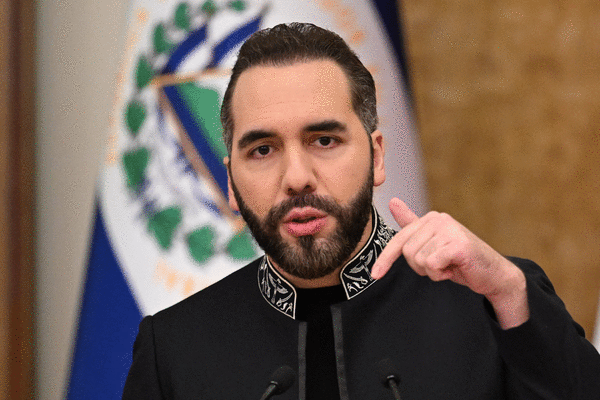
Four planeloads of soldiers from El Salvador landed in Haiti on Friday, days after the Central American nation’s president angrily threatened Haitian gangs that ambushed a group of Salvadoran soldiers over the past weekend who remain missing.
The four flights carrying 350 Salvadoran military landed a day after El Salvador sent 100 special forces troops to Haiti in response to the gang attack. One of the aircraft carrying the Salvadorans on Friday was a U.S. military plane.
Two flights from the United States arrived in Port-au-Prince’s Toussaint Louverture International Airport on Friday as well, originating from Washington Dulles International Airport.
The flights were first reported by Haiti analyst Jake Johnston, an international researcher at the Center for Economic and Policy Research.
The Miami Herald has learned that one of the aircraft carrying the Salvadoran troops, a U.S. C-130 military transport, was provided by the Pentagon at the request of the U.S. State Department. It was unclear Friday evening if the other three chartered flights carrying Salvadoran military, including a Boeing 737 that turned up unannounced before 10 p.m., had been provided by the U.S. government.
The arrival of the flights and the participation of U.S. military aircraft raises questions about whether the reaction of the president of El Salvador — a strategic economic and security partner of the United States — to the ambush of his troops is drawing Washington deeper into the armed crisis in Haiti.
El Salvador and several other countries have provided troops that have deployed in Haiti over the past few months as part of a United Nations-authorized Gang Suppression Force to help Haiti deal with its growing violence crisis. The U.S., which supports the gang-fighting force, is one of seven countries providing strategic direction and oversight, while Washington also plays an outsized role in determining which countries can participate and coordinates their deployment.
Sources have told the Herald that U.S. officials have led negotiations with Salvadoran President Nayib Bukele over his insistence on sending special-operations troops to Haiti to help the gang-fighting force search for the missing soldiers, who are part of the aerial support the country provides.
A spokesman at U.S. Southern Command, based in the city of Doral in western Miami-Dade County, confirmed the Pentagon’s role but directed additional questions to the State Department.
“U.S. Southern Command confirms that a U.S. military aircraft providing logistical support arrived in Port-au-Prince,” the Southcom spokesperson said.
The State Department did not respond to several requests from the Herald asking about the flights.
The first of the El Salvador aircraft landed shortly after noon Friday, about an hour after the first of two U.S. government flights arrived from Washington, D.C. The airport was off limits to journalists, and no manifest for the flights has been provided. It was not clear who was aboard the U.S. aircraft. One airport employee described the group that got off one of the planes as having the appearance of special operations troops, wearing U.S. military uniforms.
The additional deployment puts an additional 350 Salvadoran soldiers, mostly special forces, on the ground in Haiti, with more expected to follow. This follows the deployment of the first one hundred earlier this week, first reported by the Miami Herald.
The troops are part of an infantry company joining at least three rescue operations involving helicopters and ground forces, which have so far failed to locate the missing soldiers, said Diego Da Rin, Haiti analyst for the International Crisis Group. The Salvadoran soldiers were ambushed by members of the Chen Mechan gang, who were later joined by members of 400 Mawozo, another armed group.
“While some of these troops are already in Haiti, El Salvador’s president, Nayib Bukele, has threatened gang leaders with a much larger offensive if the missing Salvadoran soldiers are not returned alive,” Da Rin said. “Military pressure is mounting, in hopes the soldiers will be released, including a reported attack with explosive drones on a compound belonging to 400 Mawozo leader Lanmò San Jou. But even with a major offensive, finding the Salvadorans will be like looking for a needle in a haystack unless gangs agree to hand them over.”
Bukele on Friday dismissed critics who say he is falling into a trap by sending his troops into a territory controlled by gangs.
“When God grants us victory, the same people who say all that today will change their tune. They’ll say it was always easy, that anyone could have done it, that Haiti’s gangs weren’t as dangerous as people thought,” he wrote on X. “In short, we’ve never listened to them, and we’re not about to start now. Everyone who has enlisted is a believer, and we have entrusted this mission to God, while Haiti’s gangs are satanic, and it’s public knowledge that they carry out human sacrifices.”
He ended his post by quoting from the biblical book of Deuteronomy: “The LORD will cause your enemies who rise against you to be defeated before you; they will march out against you in one direction but flee from you in seven directions.”
The four missing Salvadoran soldiers, all aviation technicians, were shopping at a supermarket in the gang-controlled neighborhood of Santo, in the Croix-des-Bouquet area of the Haitian capital. It is unclear why they were out without additional security and the incident remains under investigation. The men were returning to camp when their white armored Toyota Land Cruiser was attacked by members of the two Haitian gangs.
A statement from the Armed Forces of El Salvador said that the gunmen, after firing on the vehicle, set it on fire with an explosive device. The Salvadoran men were able to get out of the vehicle, the statement said.
While rumors in Haiti persist that the men may have been beheaded by the gangs, Bukele described them as being taken hostage.
Romain Le Cour Grandmaison, director of the Haiti and Caribbean Observatory at the Global Initiative Against Transnational Organized Crime, said the crisis comes at a tense moment, both for the gang-fighting efforts in Haiti and within the international community’s support for the gang suppression force.
The terms under which the additional Salvadoran forces in Haiti will be used remain unclear, he said.
“When a country contributing troops to the [gang-fighting force] deploys units in parallel, it is fair to ask whether multilateral and national frameworks are beginning to overlap, and how coordination will be ensured,” Le Cour Grandmaison said.
The ambush of the Salvadorans, the first major incident since the latest international force began deploying to Haiti in April, follows the recent six-month renewal of the force by the U.N. Security Council.
Le Cour Grandmaison noted that the force has struggled since its arrival in April, but was beginning to gain momentum. The gangs have become better equipped in recent months, testing the prowess of both Haiti security forces and an explosive-drone task force operating out of the prime minister’s office.
The gang-fighting force’s timeline “followed a rhythm set by logistics and political negotiations. The process was slow, but moving forward. This crisis shatters it,” Le Cour Grandmaison said. “A force whose deployment remains incomplete finds itself in a reactive posture and a tactical trap.... This blurring of roles raises concerns about accountability and rules of engagement.”
The Viv Ansanm gang coalition, which 400 Mawozo is a part, had recently begun to show signs of fragmentation, he said.
“This incident may restore cohesion among its members. Two major leaders, Krisla and Lanmò San Jou, have spoken this week. Their tones differ, but the message converges: these groups intend to hold their ground. The communication battle is open,” the Haiti analyst said. “Gang have entered a hostage-taking logic, using captives as a bargaining chip, a means of pressure and perhaps a shield..”
U.N. Secretary General António Guterres’ office said Friday that the ongoing armed violence in Haiti continues to cause significant displacement of Haitian civilians, with more than 7,000 forced to flee their homes in the rural town of Petit Rivière in the Lower Artibonite and another 3,000 from Arcahaie in the West region, not far from where the Salvadorans were attacked, over the past four days.
©2026 Miami Herald. Visit miamiherald.com. Distributed by Tribune Content Agency, LLC.





Comments