Death of Epstein whistleblower is latest connected to sex trafficker's circle
Published in News & Features

The late September death of a prominent British banking whistleblower has renewed interest on the expansive network of people connected to Jeffrey Epstein who have died, some under mysterious circumstances.
The latest death happened Sept. 23. Simon Andriesz, 57, a former British banker who exposed financial ties between Epstein and Trump’s commerce secretary, Howard Lutnick, was found dead in a town just outside of Bangkok, Thailand. His death was reported as “asphyxiation from hanging.”
Britain’s Financial Conduct Authority, or FCA, has ordered a probe into how it handled the case after Andriesz complained in a post before his death — and in media interviews — that his findings were not being taken seriously in the U.S. and the U.K.
It’s not clear why he was in Bangkok since he was most recently living in Cornwall, England. But it comes just months after he wrote about the toll that going up against powerful people had taken on his life.
“The personal consequences of whistleblowing, and the retaliation I say followed, have been devastating for my family and me,” Andriesz said in his last post on X, dated Aug 9.
His family has said he died by suicide. He indicated that he had been under enormous pressure, and not getting any support from the very governments and law enforcement authorities who were supposed to protect him as a whistleblower with key information about possible corruption.
In his X post, Andriesz explained, in excruciating detail, his efforts to expose years-long business links between Epstein, Lutnick and BGC Group, where Andriesz was previously a managing director. Lutnick, former CEO of the Wall Street firm Cantor Fitzgerald, was chief executive officer of BGC.
In 2021, Andriesz began talking to the FBI, alleging widespread money laundering and other corruption involving Lutnick. He also flagged emails in the DOJ’s Epstein files that showed Lutnick had misled the public about his relationship with Epstein.
Lutnick initially claimed that he had cut off all contact with the convicted sex predator in 2005. Andriesz discovered emails that revealed Lutnick had visited Epstein’s homes in 2011 and 2012 and had discussed business projects with Epstein.
Lutnick has characterized his contact with Epstein as “limited interactions,” but documents showed they were in business together as recently as 2014, according to a report by CBS News.
(Lutnick has not been charged with any wrongdoing, but his ties to Epstein have faced scrutiny by the House Oversight Committee).
“I intend to share more of the evidence and the story behind what happened,” Andriesz wrote ominously in his last X post.
Andriesz’s death is the latest in a series of deaths, connected, directly or indirectly, to Epstein and/or the financial institutions associated with him. Some of the deaths also involve people tied to Trump or his associates, like Lutnick.
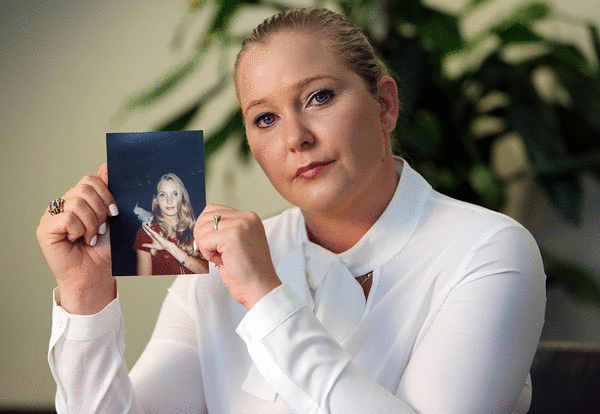
More than 20 people connected to Epstein’s broad social, legal or financial circles have died over the years from causes officially ruled suicide, overdoses, accidental or natural causes. Some of them include victims, like Virginia Giuffre and Carolyn Andriano, both of whom died by suicide.
To be clear, there is no evidence of foul play associated with any of these deaths (except for one, see below) but they are another grim part of the Epstein mystery that raises questions about how deep his connections go — and whether the Trump administration, in refusing to release all the Epstein files, (and heavily redacting others) is hiding something more sinister.
Here is a brief look at some of the other deaths:
—Jean-Luc Brunel, 76, (February 2022) — the head of a French modeling agency awaiting trial for trafficking girls to Epstein, was found hanged inside a Paris prison cell in February 2022. Brunel and Epstein ran a modeling agency that was used as a front for his sex trafficking operation. The agency, MC2 Model Management, was founded in Miami in 2005; Epstein financed it with a $1 million line of credit.
—Daniel Siad, 69, (July 2026) — an international modeling scout, was found dead in his home in suburban Paris in July 2026. Siad had just given an interview to CNN, which reported his close ties to Epstein. He was under investigation for human trafficking. Last I checked, his cause of death is still pending toxicology reports.
—Arthur Shapiro, 43, was gunned down in 1985, weeks before he was scheduled to be questioned by a grand jury about illegal tax shelters. Shapiro managed the finances for Les Wexner, the former CEO of L Brands and Victoria’s Secret. Following his murder, Epstein took over Shapiro’s money management role, and Wexner became Epstein’s primary client.
—Mark Middleton, 59, (May 2022) — died of a shotgun wound and hanging at the Heifer ranch in Perryville, Arkansas. Middleton was special assistant to former President Bill Clinton who helped facilitate Epstein’s visits to the White House. He was also a passenger on Epstein’s jet, the “Lolita Express,” and exchanged several messages with Epstein from 2009 to 2013. However, the coroner’s report noted that Middleton had been suffering from depression and his death was ruled a suicide.
—Vitaly Churkin, 64, (February 2017), was a Russian ambassador to the United Nations who died suddenly in New York City. Russian authorities initially said he died of heart failure, but the NYC medical examiner’s office, which conducted his autopsy, said his death needed further study.
Russia was successful in quashing further details about his death. Churkin met with Epstein multiple times from 2015 to his death. Epstein emailed tech mogul Peter Thiel after Churkin’s death writing “As you read my Russian ambassador friend died. Life is short, start with dessert.”
—Umar Dzhabrailov, 67 (March 2026) — a Chechen businessman and former senator in the Russian Federation was discovered lying in a pool of blood with a gunshot wound to his head in March 2026. His death was reported as a suicide.
Dzhabrailov had once referred to Ghislaine Maxwell as his “soulmate,” according to the New York Post, which cited an interview he did with East2West, a British news outlet.
“I knew Epstein. I was introduced to him by Ghislaine Maxwell, a soulmate of mine,” he said, according to the news agency.
—Efrain “Stone” Reyes , 51, (November 2020), was Epstein’s cellmate at the Metropolitan Correctional Center prior to Epstein’s death. He was transferred out of the jail to a prison for cooperating witnesses. The staff was under orders to make sure Epstein had a cellmate at all times, but they inexplicably allowed Epstein to return to his empty cell on Aug. 9, 2019, where he was found dead the following morning. Reyes was released from jail, interviewed by authorities, then died later of COVID-19 complications.
Deutsche Bank deaths
There is no evidence these Deutsche Bank deaths were related to Epstein, but they are among several suicides or accidental deaths involving Epstein’s financial institution. Epstein didn’t become a Deutsche Bank client until 2013, but the bank faced massive regulatory fines and lawsuits for taking on Epstein as a client and failing to flag his sex-trafficking financial operations.
—William Broeksmit, 58, (January 2014) his stepson, Val Broeksmit, 46 (April 2022) — William was a senior Deutsche Bank executive who was found hanging at his home in London in 2014 amid a bank money-laundering probe. He left several suicide notes to his friends and family. Afterward, his adopted son, Val, used his father’s passwords to find thousands of confidential bank documents in his father’s email account. In 2019, he turned into a whistleblower, sharing the documents with federal investigators and journalists. He reportedly handed over hundreds of documents to federal agents probing ties between Deutsche Bank, Russia and Donald Trump.
Val, who suffered from addiction, had reportedly told the FBI that he had been trying to hack into Epstein and Maxwell’s emails prior to his death. His death was ruled accidental from a tree fall.
(Oddly, a photograph of a New York Times article about Val Broeksmit’s death was found among Donald Trump’s files seized in an FBI raid at Mar-A-Largo in 2022).
—Thomas Bowers, 55, (November 2019) — Bowers, the onetime head of Deutsche Bank’s American wealth-management division where he supervised Trump’s private banker, Rosemary Vrablic, died by suicide by hanging, according to Los Angeles County Medical Examiner-Coroner’s office.
After Bowers died — just months after Epstein’s death in August 2019—viral social media posts began labeling Bowers as Jeffrey Epstein’s private wealth banker, which is not true. He nevertheless was at one point involved in upper echelons of the bank that may merit closer scrutiny for the way they also handled Epstein’s transactions related to sex trafficking.
Many of these lives ended as they were trying to expose possible corruption and wrongdoing, which makes transparency all that more vital.
Andriesz’s death comes four months after the BBC aired a news documentary featuring him and his allegations concerning Lutnick’s ties to Epstein. The BBC described Andriesz as the whistleblower who uncovered evidence concerning Lutnick’s previously undisclosed business relationship with Epstein.
According to the BBC, Lutnick had tried, in Andriesz’s words, to “buy a prince,” by proposing a joint business venture with the former Prince Andrew in 2013 involving a $1 million British pounds loan that never materialized.
They were all connected in one way or another to a financial and criminal network run by some very powerful people.
Which brings us back once again to what the Trump administration is holding back from the Epstein Files.
On Sept. 30, U.S. Sen. Ron Wyden, D-Oregon, sent a demand letter to Attorney General Todd Blanche and FBI Director Kash Patel, accusing the DOJ of “illegally” withholding a critical, undisclosed FBI interview with a top executive at a major bank.
He said his investigators discovered the FBI conducted an interview with the banker closely tied to Epstein that was not released as part of the Epstein Files Transparency Act passed by Congress.
Wyden authored an exhaustive probe in August providing evidence that executives at JPMorgan Chase, Deutsche Bank and Bank of America violated federal anti-money laundering laws by failing to screen and report more than $1 billion in suspicious financial transactions.
“By looking the other way for decades, the banks allowed Epstein to have ready and reliable access to cash necessary to recruit, harbor and transport young women and underage girls for the purpose of human trafficking and sexual abuse,” Wyden wrote in the letter.
©2026 Miami Herald. Visit at miamiherald.com. Distributed by Tribune Content Agency, LLC.





Comments