TikTok tarot reader accused Idaho professor of ordering 4 student murders. Here's what she says it cost her
Published in News & Features
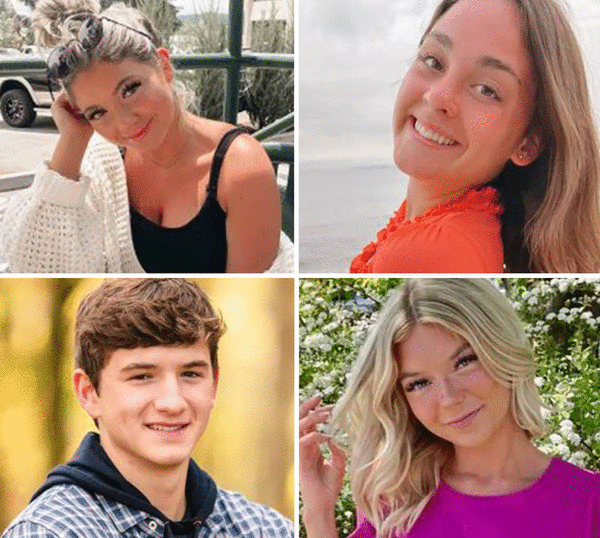
BOISE, Idaho — A University of Idaho professor has detailed the mental toll caused by a TikTok tarot reader who accused her of being responsible for the 2022 high-profile murders of four students in Moscow, Idaho. She now wants people to reconsider how they consume social media.
History professor Rebecca Scofield wrote a New York Times opinion piece published last week about how her life was rocked after a woman began blaming Scofield on social media for the four murders that had deeply shaken her Moscow community.
Ashley Guillard, 41, of Houston, uploaded her first TikTok video about the professor less than two weeks after the fatal stabbing of seniors Kaylee Goncalves and Madison Mogen, both 21; junior Xana Kernodle, 20; and freshman Ethan Chapin, 20, at a rental home near campus in November 2022.
Citing no evidence other than her tarot cards, Guillard claimed the professor ordered the murders to cover up an affair with one of the female victims. Guillard posted photos and contact information of Scofield, who has said she never met any of the victims.
“I didn’t know any of the students, who had been killed only 11 days before I saw the video,” Scofield wrote in her essay. “The accuser knew nothing about me, lived in Texas and used tarot card readings as the only basis for her claims.”
Police arrested Bryan Kohberger for the crimes in December 2022 after matching his DNA to evidence found on the murder weapon. Kohberger pleaded guilty to the killings in July 2025.
Guillard would go on to upload hundreds of videos blaming the professor, raking in millions of views. She continued to post her unsubstantiated claims until August 2024, the Idaho Statesman previously reported.
Scofield, an Emmett native, said she began receiving threatening calls, messages, comments and emails from people who appeared to believe Guillard’s TikToks. The following “years of sleeplessness and stress” have caused her physical and psychological issues she’ll carry the rest of her life, Scofield said.
“I stopped sleeping well, and instead, I walked the hallway outside my children’s rooms, utterly terrified that they would be harmed by the person hyperfixated on me, any of her believers or the person actually responsible for the murders,” Scofield wrote. University of Idaho professor encouraged others to rethink social media.
The history professor said she hoped her story would make people more thoughtful about their social media consumption. She pointed out that video creators are incentivized to distort the truth. Inflammatory assertions can bring in more views, increasing the possibility of getting paid by platforms or through sponsored content.
Scofield suggested users scroll past creators who are not transparent about their research.
“(The videos) were amplified by unsuspecting viewers and algorithm-driven platforms, and the harm seeped into every aspect of my life,” Scofield wrote. “I came to realize that all of us are responsible for the online world we inhabit, and all of us must fight its tendency to propagate lies.”
She also said social media companies should be held accountable for the content they platform. Many users did not seek out Guillard’s videos, but were instead fed them by algorithms, according to the professor.
“A federal law, Section 230, protects online platforms from many defamation lawsuits, meaning that only individuals are liable for misinformation, even if a platform helped spread it,” Scofield wrote.
Another way to hold accountable those spreading lies online is to sue them. Getting justice through the courts is not easy, Scofield acknowledged, but she said it serves as a “necessary warning to other bad actors.”
In February, Scofield was awarded damages in a defamation lawsuit she filed against Guillard. A jury ordered the TikTok creator to pay $10 million. Guillard appealed the decision in April.
“So, before you, too, are accused of murder on the internet, question the content you are consuming or creating,” Scofield wrote. “Ask yourself if the platforms that profit from enabling the spread of unverified information should continue to remain insulated from accountability. And remember that what seems like harmless entertainment could shape not only individual lives, but the course of history.”
_____
©2026 Idaho Statesman. Visit at idahostatesman.com. Distributed by Tribune Content Agency, LLC.



Comments