Judge blocks mail ballot changes as Supreme Court weighs case
Published in News & Features
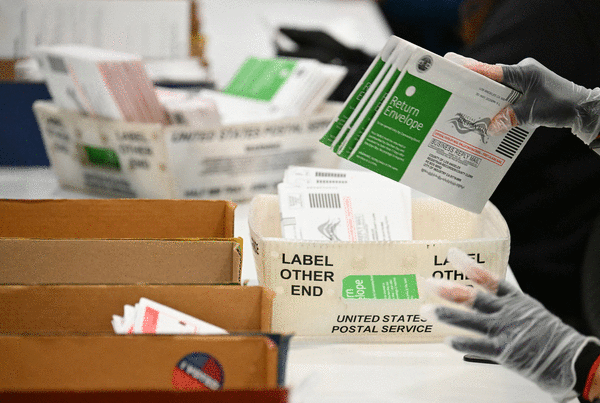
WASHINGTON — A federal judge has blocked the Postal Service from enforcing new limits on mail-in voting through the Nov. 3 midterm elections, extending a short-term pause as North Carolina began sending ballots on Friday and the U.S. Justice Department was urging the Supreme Court to intervene.
The decision on Friday from U.S. District Judge Indira Talwani in Boston marks the latest setback for the Trump administration as officials have raced to implement changes to how mail-in ballots are handled for the current election cycle, when Republicans are defending their tight majority in Congress.
Talwani’s preliminary injunction means the Postal Service can’t require states to comply with the agency’s controversial new rules in order to have election mail delivered through the November contest. The fact that North Carolina election officials have put the first batches of ballots in the mail further complicates the administration’s push to secure a court order that would allow the rule changes after the early voting period is officially underway.
“We’ve now secured longer-term relief that will keep the USPS changes blocked while our case moves forward,” California Attorney General Rob Bonta said in a statement. “We will continue to take all steps to stop the Trump administration from trampling on voting rights and restricting mail voting.”
Spokespeople for the DOJ and White House didn’t immediately respond to requests for comment.
The rule changes are part of a broader push by President Donald Trump to overhaul how mail-in voting takes place and expand the federal government’s role.
Postmaster General David Steiner, in a statement Friday, said the Postal Service had “acted within our legal authority” to comply with an executive order Trump issued in March, “but ultimately the courts will decide that question, and we will follow the court’s determination.”
The new rules would require state election officials to follow revised design guidelines for ballot envelopes and submit voter information to a new centralized portal that postal authorities could check against envelope barcodes. Postal authorities would be empowered to return ballots to state officials if they failed to comply.
The Boston judge previously entered a 14-day pause on the Postal Service’s rule changes while she weighed a longer-term block, and the Justice Department was appealing that when she issued her latest decision. On Thursday, U.S. Solicitor General D. John Sauer asked the Supreme Court to lift Talwani’s order, citing the fast-approaching deadlines in North Carolina and other states to start sending ballots.
The Supreme Court set a Sept. 8 deadline for the Democratic state officials and voting rights advocacy groups that sued to file a response. By the time Talwani ruled, the justices also hadn’t acted on the Justice Department’s request for an immediate temporary order known as an administrative stay to clear the Postal Service to enforce the rules in the meantime.
The fight over whether the postal agency can enforce the rule changes in the future is expected to continue after the midterms are over.
In entering the latest injunction, Talwani once again found that the challengers were likely to win their claims that the Postal Service was unlawfully asserting power over elections that the Constitution primarily gave to states and, to a lesser extent, Congress.
The Supreme Court sided with the administration in August during an earlier stage of the court fight, finding that a lawsuit brought by Democratic state officials was premature because federal agencies hadn’t taken final steps yet to carry out Trump’s March executive order. The legal fight entered a new phase after the Postal Service finalized the rules that are now at the heart of the dispute.
Democrats and other administration opponents have accused the president of trying to interfere to help Republicans as they face a tough fight to keep control of Congress and potentially undermine public confidence in any results that show Democrats flipping seats. The president and his allies contend changes are necessary to ensure only eligible U.S. citizens are voting. Instances of noncitizens casting ballots are historically rare.
During arguments before Talwani earlier in the week, she pressed the parties on whether the Trump administration’s move implicates a legal principle known as the major questions doctrine. The Supreme Court has seen the doctrine as requiring Congress to speak clearly when agency decisions touch on major questions.
The government argued the doctrine doesn’t apply because the Postal Service’s new rule doesn’t implicate a large economic impact, with Justice Department lawyer Michael Velchik calling the question of whether Congress authorized the rule “the $64,000 question” in the case.
“As a practical matter, if it is a rule that is impacting how many millions of ballots — tens of millions of ballots” are sent, “how is that simply a minor little program?” the judge asked.
The record, she said, tilted toward the possibility of major voter disenfranchisement. She questioned whether that loss of rights was enough, or whether the court need dollar figures.
©2026 Bloomberg L.P. Visit bloomberg.com. Distributed by Tribune Content Agency, LLC.





Comments