Dialing a nonemergency call line in WA? It might be AI that answers
Published in Business News
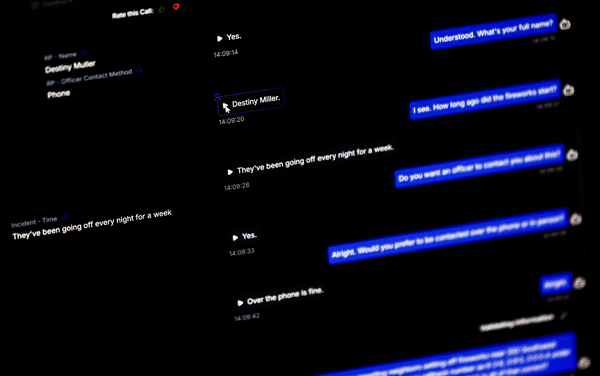

SNOHOMISH COUNTY, Washington — Vi Tran and most others in her neighborhood agree that nobody should be shooting off fireworks after the Fourth of July. But one household doesn’t see it that way.
Hearing bangs and whistles in August, Tran called the county’s nonemergency line for the fifth time in a month.
Not a single ring was heard, just a short recorded message about language options. Then Ava answered. “SNO911 nonemergency line. How can I help you?” the steady, feminine voice said, just like a dispatcher would.
But Ava is not a dispatcher. It’s an AI agent that Snohomish County has been using for about two years for nonemergency calls. The technology is fielding these calls in 20 or more states nationwide and in at least eight Washington counties — Snohomish, Kitsap, Mason, Grant, Cowlitz, Clark, Chelan and Douglas.
For callers like Tran, Ava can drastically cut wait times. “Of course I’d rather be talking to a person, but it gets me where I need to be going,” Tran said in an interview.
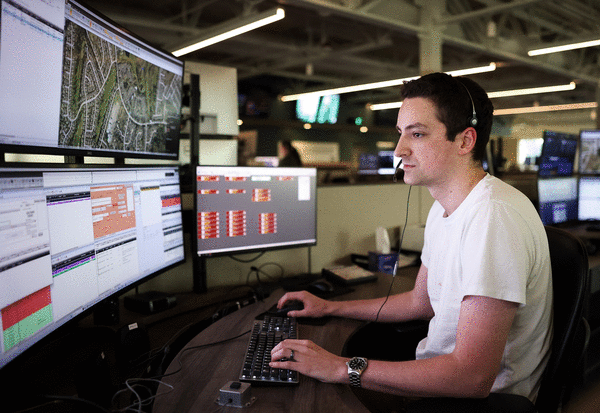
There are also signs the technology is helping with dispatcher shortages in emergency call centers and easing workloads for people in these often emotionally taxing jobs. In Snohomish County, and elsewhere, dispatchers who answer when people dial 911 also staff nonemergency lines.
But with little independent research and no state or federal standards for how accurate these systems should be, there are also rising concerns that the AI technology could miss situations where callers urgently need help.
Another pitfall: Speech recognition systems like Ava tend to have different accuracy rates depending on accents and demographics like race, gender and age.
Jevan Hutson, director of the Technology Law and Public Policy Clinic at the University of Washington, warns that bringing AI into emergency dispatching is a high-risk deployment."
"The consequences of getting it wrong are pretty significant," he said.
State and local lawmakers typically regulate emergency dispatching, but so far there are no signs they are rushing to step in.
In October, a subcommittee of the Washington State 911 Advisory Committee finished drafting voluntary “responsible AI in 911” practices. The subcommittee’s acting chair, Andrew Hahn, said the guidelines call for prioritizing accessibility to 911 services, involving the public in decision-making and establishing clear AI oversight within agencies.
Hutson said that while state legislators focused on some AI-related issues this year, emergency dispatching concerns were not on the agenda.
"Attention, at least in Olympia, is certainly not here," Hutson said.
'Filling an empty slot'
Snohomish County 911, or SNO911, was one of Ava's earliest adopters, incorporating the technology in November 2024 into its nonemergency line, which people use to report things like noise complaints or past crimes. Calls to 911 in the county still go directly to people.
A year earlier, the International Academies of Emergency Dispatch reported that America’s 911 workforce was in crisis. About 1 in 4 positions at the 911 centers it surveyed sat vacant, on average, from 2019 to 2022. Dispatchers across the country were burning out. It didn't matter if the county was urban or rural; the people answering calls felt overworked and underpaid.
Even at SNO911, despite paying workers nearly 40% above the national median, hiring could not keep up. Nonemergency calls to the agency nearly doubled in five years, leading to hold times that regularly stretched over 10 minutes.
For dispatchers, handling 911 calls and nonemergency calls in the same shift can be jarring.
“It’s hard to answer a phone call where you’re doing CPR on an infant and the next call is parking complaints,” said Jessica Carico, who has worked 15 years as a SNO911 dispatcher.
As for Ava, “she's just another employee. She fills a seat basically, which is nice because she doesn't call in sick," Carico said. "It's not taking away a job. It's just filling an empty slot.”
With AI focusing on minor calls, dispatchers can focus on the bigger ones, Carico added.
But dispatchers and tech policy experts want to know: Does AI rival dispatcher judgment? Can it recognize when a caller doesn't realize they are in an emergency?
These questions remain unanswered.
Tran, who called about the fireworks, said that while the AI system worked, without a human on the other end of the phone line, there’s not the same "sense of feeling heard and validated."
Aaron Wright, a dispatcher in Traverse City, Mich., where Ava is also used, voiced similar concerns.
"I sit in a dark room and wait for someone to have the worst day they've ever had," Wright said. He wants to be the one who answers the phone, even if it’s to say "I'm not the person who can solve that for you, but let me get you the number for someone who can."
‘Is your parent breathing?’
One stumbling block for the technology is that sometimes people in dangerous situations call nonemergency lines.
Matthew Miko, executive director of academics, research and communication at the International Academies of Emergency Dispatch, said that because of the stigma around domestic violence, people who aren't ready to see their situation as dangerous often don’t call 911.
They aren't the only ones, Miko said. Older callers and children might say it's not an emergency, then they describe a spouse's or parent's life-threatening symptoms.
Behind Ava’s humanlike voice are AI models that rapidly deliberate to process conversations, choose responses and decide when to involve a human dispatcher.
One model may be fine-tuned to listen for clues about where the caller is. Another could detect signs of someone trying to "get past the robot" because they’d rather talk to a person. Another stays alert for signs of an emergency.
The company behind Ava is Seattle-based startup Aurelian. Its CEO, Max Keenan, said the company tracks missed emergencies "obsessively" and that Ava has only mistaken an emergency for a nonemergency once.
Keenan said the error happened in 2024, as the technology first rolled out, and involved a caller following up on an incident from two weeks earlier who was complaining of headaches. The call was quickly transferred to a dispatcher but should have been immediately flagged as an emergency. Keenan said updates to Ava since then factor in situations like this.
So far, the only count of Ava's missed emergencies comes from Aurelian itself.
Agencies can adjust the “resistance” in the system to guide how frequently Ava transfers calls to human dispatchers. Currently, about 41% of SNO911’s calls that begin with Ava are transferred to dispatchers on nonemergency lines. Nearly 10% are sent to the emergency queue.
SNO911 Executive Director Kurt Mills said the agency is taking a cautious approach to automation, partly because of how often “a dispatcher will produce a better outcome.” Still, the agency said it has seen notable benefits since Ava arrived, with those 10-minute-plus nonemergency hold times falling to an average of 47 seconds this past year.
Experts note that some resistance settings are easy to set, like "send to human dispatcher as soon as the caller asks twice." But others are more complex, like how to factor in sarcasm or fear.
Miko, with the International Academies of Emergency Dispatch, gives an example of how Ava might fall short. A dispatcher asks, "Is your parent breathing?" A child answers, "Yes, I think so," but their voice is shaking. An AI agent may over weight the literal text, the "yes," and miss the scared tone.
It’s unclear how many Washington counties are using Ava. Aurelian’s Keenan did not respond to questions seeking to clarify this. Meanwhile, several other AI systems that assist with emergency dispatching are sold in the state, including GovWorx’s Non-Emergency Agent Line, or NEAL, Versaterm’s CallTriage and Axon’s Prepared AI.
None of these tools' error rates are publicly available, and there is no state or federal law that requires vendors to report missed emergencies.
'Supplying institutional credibility'
Mills believes Aurelian’s Ava is unlike anything else on the market. He and others at the agency were so convinced that they bought it without seeking bids from other companies.
Aurelian billed SNO911 $118,944, before tax, for Ava’s service in 2026, according to an invoice. That's based on projections that Ava will answer around 192,000 calls at 61 cents per call. If Ava answers more calls than that, SNO911 won’t owe more, said Mills.
For emergency call centers, a perk with Ava is that agencies that help Aurelian develop and improve its products can get discounts. At SNO911, this arrangement involves dispatchers giving feedback to help the company improve the software.
Hutson cautioned that this could blur the line between a customer evaluating the technology and the developer selling it, and argues such a dynamic is more problematic with a public agency.
"The public is sort of supplying institutional credibility as well as public safety expertise to a commercial product," Hutson said.
While there’s a collaborative aspect to improving the product, liability for errors rests with the agency. Under SNO911's contract with Aurelian, if a dispatcher makes a mistake based on a recommendation from one of the company’s systems, SNO911 bears the responsibility.
That includes Cora, Aurelian’s AI co-pilot for emergency calls, which SNO911 adopted in January. Cora listens in on calls and sends dispatchers real-time reminders, such as asking for a vehicle description after a car crash. Mills said dispatchers are responsible for not over-relying on Ava or Cora.
SNO911’s Carico said Cora is “like a little stalker” behind her on calls, useful for spell-checking words like schizophrenic.
Michigan dispatcher Wright said he could see Cora being useful in rare, high-stress situations, like a water rescue. “But when those things come up, I’m not thinking, 'Oh gosh, I better go to my little Cora assistant,'” he said. “I lean on my training.”
Accuracy is another concern. No speech recognition system is equally accurate for everyone, and a system that mishears words may also misunderstand emergencies, explained Allison Koenecke, a professor at Cornell Tech in New York City, who researches algorithmic bias.
In a 2022 study of Washington communities, University of Washington researchers found that automated speech recognition error rates were more than three times higher for Black American English speakers and more than six times higher for Native American (Yakama English) speakers, compared to white American speakers.
Keenan said Aurelian's word error rate runs 5% to 8% depending on accent and region, and that the company tracks demographic breakdowns internally. He said sharing that data publicly "would make sense," but they "haven't really had that many customers ask."
Public safety experts argue that disclosure of word error rates, along with how those rates change when callers are stressed, shouldn't be negotiated with companies but required by law.
Hutson, the UW professor, said local governments should demand independent testing and the right to audit AI dispatching technology, as a protection to agencies and dispatchers. But he noted smaller agencies especially can feel pressure to leave those terms out of contracts.
‘Flawed’ system, versus no answer
Strained by staff shortages, call centers aren't waiting for AI guidelines from policymakers.
"If the decision point is between having a flawed AI system versus having no dispatcher answer your call at all, then I can see how this would be an improvement," Koenecke said.
SNO911 Operations Manager Derek Wilson doesn't frame the technology as a way to save money. "Staffing is the battle,” Wilson said. “Attrition alone is crippling for us when you take 18 months to hire someone and get them fully certified. We're always hiring."
He added that some agencies pay for Ava with money budgeted for dispatchers they couldn't hire due to labor shortages.
Faith Woods, a SNO911 dispatcher, doesn’t mind Ava.
She said two years ago, nonemergency calls were sometimes backed up in the queue for her entire shift. “Now, I feel like I can take a sip of water or chat with (a colleague) for a minute,” Woods said in an interview on the dispatch center floor, before jumping on another call.
Mills, the agency’s executive director, worries about a different risk. He thinks the "AI is going to take dispatchers' jobs" narrative could become self-fulfilling, pushing more people away from the work.
"It's hard enough for me to get qualified staff and get them trained," he said.
In the meantime, some callers are checking to see if it’s a person or an AI agent who picks up the phone.
"I've even had people ask me, 'Are you real?' " said Carico, the veteran SNO911 dispatcher. "And I'm always like, 'Yes, my favorite color is purple. How can I help you?' And they're like, 'Oh, OK. I just want to make sure.' "
©2026 The Seattle Times. Visit seattletimes.com. Distributed by Tribune Content Agency, LLC.






Comments