Auto review: Redesigned 2026 Subaru Outback Wilderness is still a capable family wagon
Published in Business News
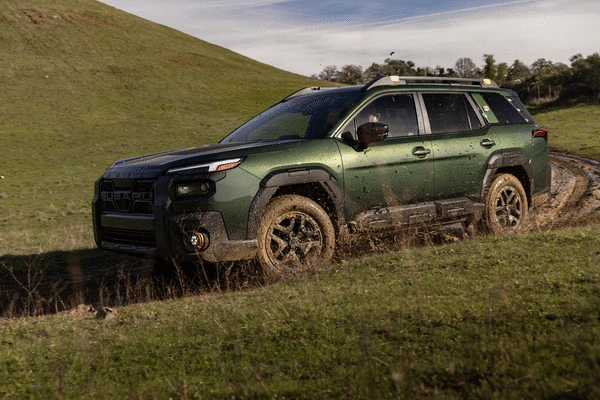
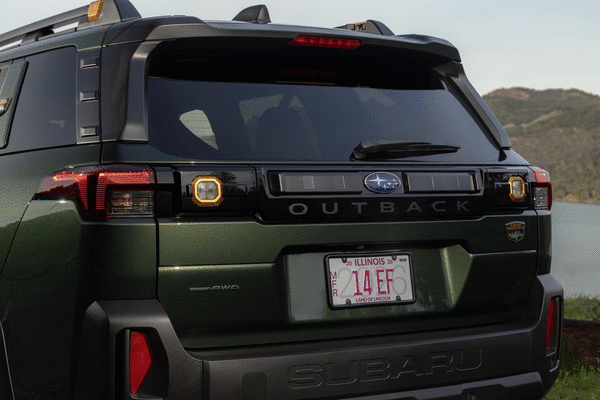
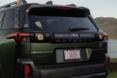
I don’t want to like this car. Subaru decided to redesign its iconic Outback, a high-riding wagon that virtually invented the crossover segment, with boxy SUV styling that seemingly rejects its wagon origins.
However, if we peel away the new rugged suit, we find the 2026 Subaru Outback Wilderness doesn’t stray far from what very loyal owners love.
It’s personal. In our 2022 Outback Wilderness, my family has driven thousand-mile days between Indianapolis and Dallas, reveled in a foot of snow, and tackled off-road trails you wouldn’t dare. It also gets my daughter to school, brings home furniture from IKEA, and takes my husband to work. It seemingly does everything well.
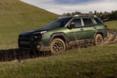
To get a feel for the contrast, I parked our previous-gen model next to the new one. They share a wheelbase, 9.5-inches of ground clearance, 17-inch matte black wheels, all-road tires, and copper accents. They are virtually the same length and height, so although the new one looks like an SUV, it is still very much a wagon at heart. Its roof rails still support 800 pounds of static load for tent camping and it can tow 3,500 pounds.
I have two main gripes with my 2022 Outback: Even with software upgrades, the infotainment screen takes too much time to boot up, and the stereo sounds tinny and terrible. Harman Kardon audio was not available in Wilderness trim, but I would have gladly paid for it given that almost any entry-level compact had a better sound system. Beyond that, I would have enjoyed ventilated seats and a heated steering wheel.
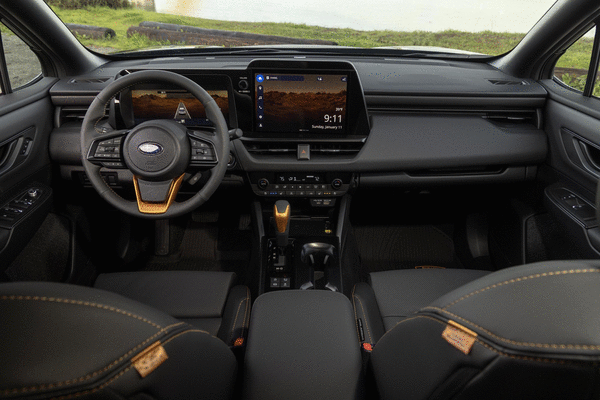
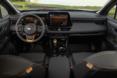
These issues are all fixed in the new Outback Wilderness. In fact, the 12.1-inch infotainment screen is the first thing you’ll notice when sliding into the new Outback as it’s front and center with crisp graphics, quick start-up, and intuitive controls. Drivers get a fully digital instrument cluster. Nice. Harman Kardon audio provides sound the Outback Wilderness deserves — as do wireless Apple CarPlay, Android Auto and console phone charging. USBs are everywhere.
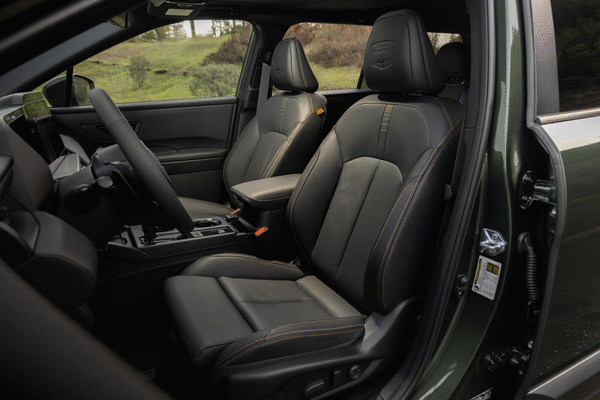
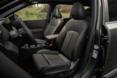
And it feels familiar. Passengers slide in slightly higher, but the view over the hood and windshield rake are more wagon than SUV. Standard vegan leather seats with copper accents are heated and ventilated. Dash and door materials are plush with copper stitching. Leather and leg-extensions are optional, amping luxury to near-Touring levels. A heated copper-tinged steering wheel, power moonroof, heated rear seats and dual-zone automatic climate control remain.
Fortifying Subaru’s reputation for safety is its three-camera EyeSight system to enable adaptive cruise, automatic emergency braking, lane keep assist and lane-centering steering. It also employs blind spot warning, rear auto brake and emergency evasive steering assist. I haven’t yet seen crash tests, but since this car shares most of the previous model’s architecture, we should expect stellar performance. After all, this is a vehicle embraced by families for journeys long and short.
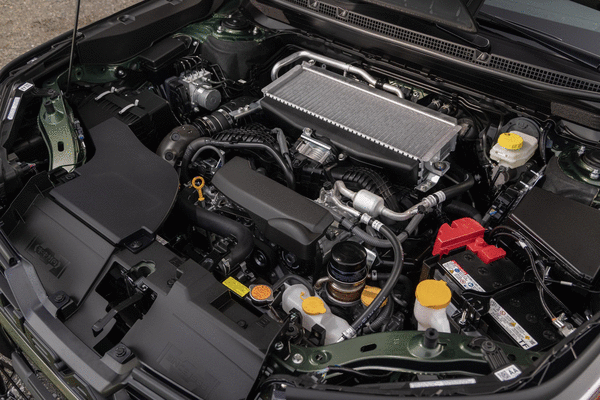
The Wilderness is seriously quick — capable of matching my 1989 Corvette’s acceleration of 0-60 mph in under 6 seconds, virtually identical to the smaller and lighter WRX. Thank fat tires and off-road gearing combined with a 2.4-liter turbocharged four-cylinder engine and standard all-wheel-drive. Output is rated 260 horsepower and 277 pound-feet of torque. Even through mountains and wide-open Texas Interstate, the car never wants for more power. Surprisingly, fuel economy ticks up to 21 mpg/27 mpg city/highway — quite good for a car with the Outback’s adventurous spirit.
I’d like it even better with a hybrid option. And, I wouldn’t complain if Subaru dropped in the WRX STI engine either. And, why not a manual transmission? I know, I’m just dreaming.
Like my OG Outback Wilderness, the new one has dual-mode X-Mode to configure the powertrain for all conditions, including deep snow and mud. It includes hill descent control, which I’ve used to creep down steep rocky trails. Even with wheels in the air, Subaru’s all-wheel-drive system brakes wheels and shifts torque to keep moving. Even better, the new version offers electronic suspension damping to absorb virtually any terrain. It’s crazy capable for a family wagon.
Like a lot of Subaru fans, I clutched my pearls at the automaker “ruining” my favorite wagon. Chill everybody; it’s still a wagon. Do I love its styling? No! Would I buy another? Absolutely. If Subaru can keep fans happy while welcoming SUV fans, then mission accomplished.
Even while moving production from Lafayette, Indiana, to Japan, prices have remained consistent. The Outback starts at $34,995, climbing to $44,995 for Wilderness models and $50,930 for our well-equipped test car. Compare to the Honda Passport TrailSport, Jeep Cherokee Overland, Nissan Rogue Rock Creek and Toyota RAV4 Woodland.
Likes: updated infotainment, electronic suspension, crazy capability
Dislikes: ugly grille, boxier styling, no hands-off steering
2026 Subaru Outback Wilderness
Five-passenger, AWD Crossover
Powertrain: 2.4-liter T4, CVT
Output: 260hp/277 pound-feet torque
Suspension f/r: Elect Ind/Ind
Wheels f/r: 17-inch/17-inch alloy
Brakes f/r: disc/disc
Towing: 3,500 pounds
Fuel economy: 21/27 mpg city/hwy
Assembly: Ota, Gunma, Japan
Base/As-tested price: $34,995/50,930
©2026 Tribune Content Agency, LLC










Comments