Feds claim U.S. Steel mistreated pregnant employee at Iron Range mine
Published in Business News
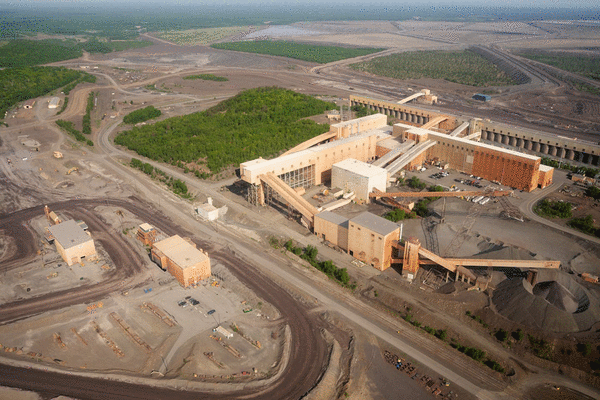
U.S. Steel failed to provide necessary accommodations to a heavy equipment operator with a high-risk pregnancy working at an Iron Range mine, according to the Equal Employment Opportunity Commission.
The commission filed a lawsuit against U.S. Steel on Dec. 19, saying the company put her in roles inconsistent with her medical restrictions. The company then forced her to take a pay cut and later assigned her to a “menial office job.”
In an emailed statement, a spokesman for U.S. Steel said the company doesn’t comment on pending litigation but is “committed to ethical conduct and following the rule of law at all times.”
Pittsburgh-based U.S. Steel is a multinational company with a history spanning nearly 125 years. Its iron ore mining operations feed its production of steel products used in automotive, construction and energy industries.
The employee worked in the Minntac Mine in Mountain Iron, Minn. The mine yields taconite, a rock with iron content used in steelmaking.
For five years before her pregnancy, the employee drove a cleanup loader. In August 2023, she shared a doctor’s note with her team leader saying she needed to stop operating heavy machinery.
Fellow employees pitched in and picked up her physically demanding work tasks, according to the lawsuit. Two months later, managers decided the “pregnancy could not be accommodated” and put her on leave.
Because the paid leave was lower than her on-the-job paycheck, the miner wanted to return to work while pregnant.
In November 2023, the company allowed her to come back and assigned her to the fuel truck, the very type of large equipment the EEOC said would be a violation of her doctor’s orders. It forced her to breathe exhaust fumes during her entire shift, the government alleged.
The company did not allow her to take on other available roles in line with her pay and experience. She and a union representative mediated an agreement with management that placed her on light duty in a wall-less office that was in the middle of renovation.
It was cold and dusty, according to the lawsuit, and the company did not provide the pregnant employee with the same warming vest her co-workers had.
She miscarried the following January, according to the lawsuit, and when she returned from bereavement leave, she no longer had her original role as a cleanup loader operator. Instead, U.S. Steel forced her into “a series of more difficult, less desirable and remote jobs within the mine,” sometimes in places without “appropriate restroom facilities for women.”
The EEOC, which takes select cases alleging violation of federal civil rights laws, sent U.S. Steel a letter outlining its findings in July. The two parties failed to reach a settlement out of court.
The action against U.S. Steel comes more than two years since the Pregnant Workers Fairness Act took effect.
Acting General Counsel Catherine Eschbach said in a statement the law created “meaningful legal protections for pregnant workers.” She encouraged employers to review workplace policies for compliance.
©2025 The Minnesota Star Tribune. Visit at startribune.com. Distributed by Tribune Content Agency, LLC.








Comments